That’s the philosophy of Vicki Fitch, a top-performing leader, international business consultant and direct sales expert. If you’ve ever dreamed of making extra money to support your family through direct sales or multi-level marketing companies that offer great incentives with flexible schedules for your family, then you’ll definitely want to listen to Vicki’s story on today’s Better Together podcast.
Vicki started her first business when she was 12 years old. She purchased her first home at 19 years old and began her first company a year later. As a “serial entrepreneur,” Vicki builds and sells business as a way of life. She’s been in the direct sales business for 20 years, consistently performing at the top 1% of her company, which allowed Vicki and her family to experience dream vacations and bonuses that have enriched their lives.
But, Vicki’s “never give up” philosophy comes from the difficult experiences in her early stages of her life. In today’s conversation, Vicki and I discuss her struggle to feel loved and valued by her parents as well as her volatile first marriage to a drug addict. As Vicki shares her life and her success, you’ll be encouraged by her authenticity and vulnerability when talking about the highs and lows of her life. Vicki and I are tall girls who share a love of high heels and we share a lot of fun moments during today’s conversation. FOR THE FIRST TIME! You have two options: You can watch my interview above or listen to the podcast audio below:
If you are a leader who dreams of achieving big goals, you’re going to absolutely love my conversation with Vicki. In this episode, you’ll learn more about:
“Evict the bully in your head” that undermine your confidence (that’s the title of Vicki’s second book);
Why mentors are important if you want to achieve your highest dreams;
How to identify whether or not you’re an entrepreneur (even if you think that you’re not).
Why Vicki is so passionate about her new global initiative’s #YouAreEnough as well as her #12Books12Months goal of writing 12 books in 12 months – this is a great story!
PLEASE LEAVE COMMENT BELOW ON THE FOLLOWING: Do you have a big dream that you want to share with us? Do you need permission to dream again?
About Vicki Fitch…
Vicki lives in Southern California with her husband, Terry and their two boys. She is blessed to have two amazing stepchildren and five grandchildren that fill Vicki’s heart with great joy. Her business is her ministry and she believes that God has blessed her greatly and she gives back every chance that she can.
Barb Roose is a popular speaker and author who is passionate about equipping women to win at life with Christ-empowered strength and dignity. Barb loves speaking at women’s conference and leadership events such as the Aspire Women’s Events, She Speaks Conference and the UMC Leadership Institute.
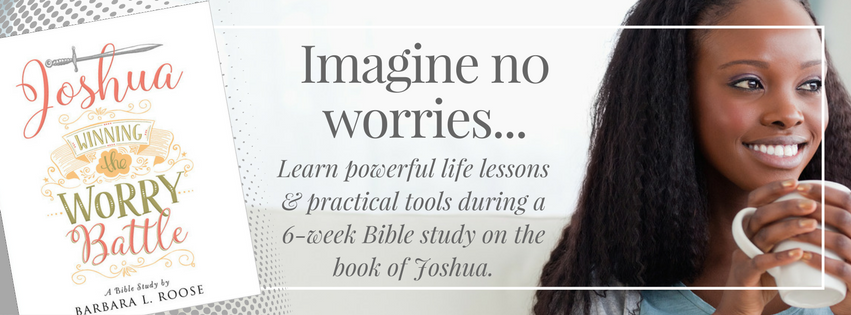
Barb is the author of multiple books and Bible studies, including her newest releases: Winning the Worry Battle: Life Lessons from the Book of Joshua and Bible study called Joshua: Winning the Worry Battle. Barb’s writing has been featured in magazines or blogs such as Simple Truth Magazine, iBelieve.com, Crosswalk.com, More to Life Magazine, Just Between Us Magazine, Cherished, InCourage and Women of Faith.
An avid traveler, reader, and lover of all things chocolate-peanut butter, Barb and her family live in NW Ohio with their dog, Quimby and a very grumpy 10-year rabbit. Visit Barb’s online home at barbroose.com.
One Sunday afternoon I received a Facebook message from someone asking for help.
This sweet lady, whom I’ll call Leah, lost her father recently. If you’ve lost a parent or any loved one, you know that the grief runs deep. Dealing with the grief requires time, rest, and lots of self-care. Yet, she was unable to care for herself because others had pushed the worries and cares in their lives from their life onto her.
Leah was overwhelmed, except the worries weren’t her own. She was drowning in the worries of loved ones around her. I’ve known Leah almost my entire life. She manages her personal affairs well and plans for the future. Yet, she felt ensnared because of her fear of uncertainty and worries about her adult children. One was experiencing a second, unplanned pregnancy and another had neglected taking care of some serious legal issues and was looking at jail time. Leah told me that she promised money, time, and energy to help her loved ones get through their situation. But she also admitted that this cycle of being stressed out and bailing out had been going on for years. In fact, before Leah’s father passed away, he gently warned Leah that taking on other people’s problems would destroy her. He was right.
I diagnosed Leah’s condition as “Secondhand Worry.”
You might be suffering from Secondhand Worry if someone tells you about his or her problems and then, you end up suffering physical and emotional worry symptoms. Another symptom of Secondhand Worry is when worry drives you to assume responsibility for someone else’s problem. (If you’re familiar with recovery principles, that kind of Secondhand Worry is worry-driven enabling.)
Here are some practical examples:
• Your spouse has trouble with a manager, and you begin to worry about his job loss.
• Your child struggles with a subject at school, you worry that he or she will end up living on your couch well into their adult years.
The problem with Secondhand Worry is that we experience all of the symptoms associated with worry like sleepless nights, stressed out feeling, lack of appetite or overeating, frayed nerves BUT the situation isn’t even about us.
If you can relate to Leah, it’s a difficult place to be. Life is hard enough trying to fight in faith for our own victory over worry. It’s not possible for us to fight someone else’s battle, too.
For the past few months, I’ve been studying Old Testament book of Joshua and there is a situation where Joshua ends up with a case of secondhand worry. God prohibited the Israelites from making treaties with the inhabitants of Canaan, yet Joshua and the leaders were snookered by a group of Gibeonites with a fictitious story and some deceptive visual aides (Joshua 9:9-13). Instead of consulting God for wisdom, Joshua and the leaders made a treaty with the lying Gibeonites, whose deception was driven by fear. As a result, the Israelites ended up being responsible for a group of people that God warned them against.
Are you feeling responsible for people in your life who should be responsible for themselves? Do they keep coming back to you over and over again with endless excuses and sad stories?
If you’ve been caught in Secondhand Worry, you know what it’s like to hemorrhage money or spend sleepless nights because someone in your life didn’t manage his or her business. I’ve said it before and I’ll say it again, don’t let someone else’s worry wear you out!
Years ago, my friend and licensed therapist Tim challenged me to admit that I was struggling with Secondhand Worry. In fact, we had a few heated sessions because I told him that he just didn’t understand! What if I didn’t intervene and something horrible happened? Then, Tim made this powerful statement: We have to let the people in our lives discover their own need for God.
Is there someone in your life that you love, but you realize that it’s time to step back and let them discover their need for God?
It’s not my role to advise you not to help, but realize that your helping has the potential to hurt both of you. It’s hurting them because instead of allowing their consequences to push them toward God, you might be putting yourself in the way. It’s hurting you because you’re carrying a heavy load of someone else’s mess. Perhaps the person will see God more clearly once you get out of the way…
I recognize that the answers to the questions of how to handle your situation might be complex. No doubt there will be emotions involved. That is why prayer is so important. When you pray, God’s wisdom can cut through your emotions and deliver clarity. Furthermore, in prayer, God’s Holy Spirit may reveal or remind you of something that wasn’t present during your conversation with that person.
If you determine that it would not be healthy to aid someone, saying “no” is difficult, but you’ve got to do it — both for their sake and yours! Here are a few things that you can say instead:
I’m so sorry about your situation, but I am unable to help you at this time.
That is so difficult! Can I help you put together a plan that you can use to deal with this situation? (Only if you can plan without taking responsibility!)
I know that you can figure this out. Keep me posted on how you are doing.
It feels bad saying “no” to helping someone, but remember, you aren’t saying that they aren’t worthy of help, only that you are no longer getting in the way of God helping them.
SHARE A COMMENT BELOW: What’s the hardest part about stepping back and letting your loved ones and friends take care of their own problems?
SaveSave
SaveSave
SaveSave
I’m so glad that you’re here!
Barb Roose is a speaker and author who is passionate about teaching women to live beautifully strong and courageous so that they experience God’s great adventure of faith and purpose for their lives.
Check out Barb’s new releases, Stronger Than Stress: 10 Spiritual Practices to Win the Battle of Overwhelm book and Stronger Than Stress: 10 Spiritual Practices to Win the Battle of Overwhelms Bible study.
Barb lives in NW Ohio and is proud mother of three adult kids. Whenever possible, Barb prefers to eat dessert first. Visit Barb’s online home at barbroose.com.