by Barb Roose | Sep 12, 2018 | Better Together Podcast
How do we teach our kids about God when we don’t know all of the answers?
How do we get our kids to participate in family devotions when they don’t want to sit still?!!!
Take a deep breath, Mom and Dad. God knows that you’re doing the best that you can. When it comes to teaching our kids about Jesus, you don’t need to know the answers and there are some fabulous resources to help you out!
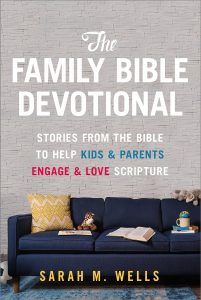
On today’s Better Together podcast, I had the most delightful conversation with author, Sarah M. Wells. She’s the author of the new resource The Family Bible Devotional: Stories from the Bible to Help Kids and Parents Engage and Love Scripture.
Mom or Dad, if you’re reading this today and you’re worried about messing up your kids’ spiritual growth, relax. It’s okay to not have all of the answers. You’ve got permission to say, “I don’t know the answer to that, but let’s keep reading and see what we can learn.”
 Sarah wrote the Family Bible Devotional as a faith-building experience to give parents confidence in helping their kids fall in love with Jesus. It includes 52-devotionals BUT there are NO dates because real life rarely sticks to a schedule! Sarah totally understands the up-and-down rhythm parents face. She deals with that in her own family. “We’ll be solid in reading the Bible and doing lessons for a few days and then, a few weeks will go by because life got busy.” Sarah says that they just keep at it.
So friends, listen to Sarah’s encoruagement today if you’ve been feeling discouraged about teaching your kids about God OR if you’re not even sure where to begin.
In this episode, we’ll talk about:
- How to set realistic expectations for family devotion time;
- Why we feel intimidated talking to our kids about the Bible;
- How to engage your kids in family devotions – even if their not sitting still.
LINKS FROM TODAY’S PODCAST:
Sarah Wells website | Facebook | Twitter
The Family Bible Devotional
SHARE A COMMENT: Do you do family devotions? How do you do them – and how do you keep at it even when your kids aren’t cooperating?
About Sarah M. Wells
Sarah Marie Wells is the author of The Family Bible Devotional: Stories from the Bible to Help Kids and Parents Engage and Love Scripture (Discovery House Publishers, Fall 2018), a novella-length essay, The Valley of Achor, available on Kindle, a collection of poems, Pruning Burning Bushes (Wipf and Stock Publishers, 2012), and a chapbook of poems, Acquiesce, winner of the 2008 Starting Gate Award (Finishing Line Press,2009). Poems and essays by Wells have appeared recently in Ascent, Brevity, Full Grown People, Hippocampus Review, The Pinch, River Teeth, Rock & Sling, Under the Gum Tree, and elsewhere.
Sarah serves as the Director of Content Marketing at Spire Advertising and as Associate Editor for River Teeth: A Journal of Nonfiction Narrative. She resides in Ashland, Ohio with her husband, Brandon, and their three young children, Lydia, Elvis, and Henry.
by Barb Roose | Jun 19, 2018 | Better Together Podcast
“If we hide the fact that Dad drinks too much, then no one will know.”
Did you grow up in a home where things like drinking or drugs weren’t talked about? Too often, when someone that we love is struggling, silence seems easier than saying something or possibly the wrong thing.
Today, I’m talking with author Kimberly Dewberry about her new book, Three Weeks to Forgiveness, which tells her story of God’s redemption in the dark places of addiction. In our conversation today, Kimberly talks about what it was like growing up with an addicted parent and perhaps, her reflections and stories might hit close to home.
Here is a recap of some of the questions that I asked Kimberly today. I’d encourage you to listen to and share today’s interview if you grew up with an alcoholic family or you know someone currently living in that difficult situation.
What are your earliest memories of your dad’s addiction in your life?
“I remember going through hiding places where my dad would hide his partial or empty bottles. My mom wanted me to help her get rid of my Dad’s alcohol and get it out of the house. But I didn’t understand what we were doing. At that point, I started to blame myself. Somehow, I thought that I was the one who made my dad start drinking again. I thought that I was being punished for something. At the time, I didn’t understand the feelings that I was having until I began going through recovery later in life.”
If you could go back and talk to yourself at 15 years old, what would you tell her?
“If I could go back and talk to my 15-year old self I would say, ‘You did not cause this. This isn’t something that we caused or something that we could control. Honey, your mom doesn’t know what to do. She’s desperate. She reached out to you because she didn’t know what else to do.'”
As a teen, how did you react to your dad’s alcoholism?
“I was rebellious. I made horrible choices as a teenager and during much of my adult life. I was constantly searching for something and at the time I didn’t know what I was searching for. Now, I know that I was searching for confirmation that I was loved.”
How did your dad’s alcoholism make you feel about yourself?
“I equated my dad’s isolation and silence with lack of love. That carried over to other relationships. So in other relationships, I felt that if they weren’t talking to me, then they didn’t love me.”
What role did God play in your life? Why did you turn away from God?
“Our family didn’t go to church when I was a kid. I got saved in my 20’s but one of the most important things that I didn’t have was a good mentor to help me or guide me. I was trying to do it on my own, but I didn’t know what to do. So, when I turned away from God, it was really out of selfishness.
I wasn’t angry or bitter at God. But I had done so many bad things that I didn’t feel like God could love me anymore. I felt like God was so disappointed with me. I thought that I was too far gone, so that’s why I turned away from God.”
What negative behaviors/patterns did you struggle with during your adult years?
“I’ve been married three times. I constantly sought my value in relationships, especially with men.” I also struggled with co-dependent tendencies. I thought that I’d be happy as long as everyone else is happy. So, I tried to control people, situations, finances, outcomes ,and kids. I felt so out of control on the inside that I tried to control everyone else on the outside.”
How did your dad come to live with your family before he died?
“After years away from the family and living on the streets, my dad was diagnosed with cancer. He was released from the hospital and since he had nowhere to go, he came to live with me. It had been five years since I’d seen my dad.
It was through those three weeks of dad living in our home, that was the major event though God broke down the walls of anger, bitterness and how to show grace and forgiveness to my dad. I had a brick wall around my heart and God broke that wall down during those three weeks.”
What does it mean for you to find recovery as an adult child of an alcoholic?
“Who I am isn’t defined by my past. Who I am is defined by Christ. And I could not have realized that if it hadn’t been for God bringing Dad back into our lives for such a short period of time. After Dad died, I was grieving a lot. I got help from a Christian counselor and that’s when I heard terms like “adult child of an alcoholic” and “recovery.” I was really confused because I thought that it was my Dad with the problem. But, I realized that I needed help, so I started with Al-Anon and then moved over to Celebrate Recovery.
In recovery, I realized that I had a problem, too. I have issues that I need to work on. I cannot control what other people do, I cannot control what other people say and I cannot control how other people act. Through recovery I was able to see that God is in control and He is the one that plans our steps. It’s our decisions and our free will that allow us to either go God’s way or our own way. I have learned that by going God’s way that I can have peace, serenity, and love.”
Who needs to attend a recovery program?
Sometimes, we don’t know that we need recovery until we start going. If you are feeling out of control and yet you try to control everyone, then consider talking to a licensed therapist/counselor, Al-Anon, or Celebrate Recovery.
Connect with Kimberly – Three Weeks to Forgiveness Book | Facebook | IG | Twitter
About Kimberly Dewberry
Kimberly Dewberry struggled for 25 years to cope with the pain, hurt, guilt, regret, unworthiness, and shame brought on by her father’s addictions. Because of the loving grace of Jesus Christ, she has broken free from the shackles of rebellion and anger, and made it her life’s mission to share her journey through courageous prose.
Kimberly and her husband Patrick are the parents of 6 grown children between them and live in the Dallas area with their two super cute Boston terriers, Delilah and Daphne. Kimberly enjoys writing, reading, Bible art journaling, participating in Bible studies, and dating her husband.
SHARE A COMMENT WITH US: Did you grow up in an alcoholic home? How did your parent’s disease affect your life? How did God help you deal with the pain and brokenness?
by Barb Roose | Sep 10, 2017 | Better Together Podcast

In the newest episode of the Better Together podcast, I sharing four bridges that will help you build connection with your teen and adult daughters:
1. Kind Words – How do you speak to your daughter? What we say is most often a reflection of our heart, not our daughter’s actions. Our kind words can actually heal the emotional and physical pain that our daughters experience in life.
2. Discover Her Love Language – Do you know your daughter’s love language? Both of you can take the free test at the fivelovelanguages.com. When you invest 10-15 minutes per day in “speaking” her love language, you build resiliency into her life and she’ll have the reserve to dig deep and tackle the problems that she’s facing.
3. Ask Before You Accuse – How many of us jump to conclusions when a negative situation happens? We can build a connection instead of creating conflict when we calmly and kindly ask, “Can you tell me what happened?” and listen to what she has to say.
4. “Open the Door” – Getting our daughter to talk can be tricky because she has a lot on her mind. I share a tip to open up communication with your daughter. Listen to the podcast to find out more!
RESOURCES
The Parenting Teens Summit
An online experience designed to help you thrive as a parent of a teenager. Over 40 different Christian authors and thoughts leaders are ready to share their unique insight with you. Featured speakers include Dr. James Dobson, Dr. Juli Slattery, Dr. Paul David Tripp, Craig Gross, Kimm Carr, Craig Groeschel, and Dr. Kathy Koch, among others.
Parenting Teen Summit starts September 11-27! Click here to find out more and register!
FREE eBook
Mom, is your young daughter comparing herself to her friends? Has she made comments about how she looks or shows signs of low self-esteem? Download a free copy of my ebook, 10 Beauty Essentials to Teach Your Daughter. Reach her now with God’s beautiful truth so that she can learn how to push back against our culture’s impossible beauty standards. It’s not too early to help your daughter avoid an ugly struggle with beauty. Click here to download.
by Barb Roose | May 8, 2017 | Better Together Podcast

Last week, it rained for several days straight in my little corner of the world. It rained enough that I regretted passing up that fabulous pair of rainboots that I saw at the store. My soggy sneakers held up just fine…
Since we experience all four seasons in my area of the country, heavy spring rains always seem to wash away the last vestiges of winter and pour in the freshness of the spring season.
Is your life ready to embrace spring?
Did you know that every season has a metaphor? If you aren’t familiar with this concept, here’s a quick overview:
- Summer = sunny and steady
- Fall= transition and uncertainty
- Winter = reflection and rehabilitation
- Spring = fresh and hopeful
So, now it’s spring. Do you feel fresh and hopeful? I’m trying to be! After a long winter, I need to fill my tanks a little after a long winter. So, these days, I’m focused on finding things that inspire me toward godly momentum and creativity.
One of my main places of inspiration is walking outside. There’s something about the fresh air and walking underneath God’s big blue sky that just makes me feel close to God. And I LOVE flowers! Lucky for me, I live in a historical neighborhood filled with lots of amazing gardens.
Another source of inspiration is when I travel to speaking events. As I write out this paragraph, many of your faces that I’ve met over the past few months float across my memory – and make me smile. I’m inspired when I think about all of the women that I’ve met and all of the stories that I’ve heard.
For me, being inspired is all about putting myself in situations where my heart, mind and soul can be connected to God and connected to others who also long to be connected to God.
I don’t know about you, but the farther I get away from God, the more draining life seems to be. So, my goal each day is to make purposeful plans to find connections with God and others such as.
Here’s a quick list of six ways that I find inspiration:
1. Walking outside and focusing on God’s beauty of creation,
2. Sitting with a friend over coffee as she tells me about how God is stretching or growing her faith,
3. Attending a conference or event that will challenge me in my faith or help me expand my skills,
4. Consuming books or listening to podcasts by people who write/speak about their faith or craft,
5. Journaling or reading old journal entries to see how God has stretched and grown my faith.
6. Traveling to new places and meeting new people lets me see faith from lots of different and powerful perspectives.
Now, this is my list. But, it’s not the be-all-end-all list. However, if you’re looking for some ideas, perhaps my list might motivate you to create your own list.
Don’t forget, inspiration is essential for living!
Inspiration keeps us moving forward. Inspiration is essential for resilience and keeping us hopeful. Inspiration keeps us looking toward the future when we’re tempted to focus on the past or the negative circumstances in the present.
So, what should go on your inspiration list? Share what inspires you in the comments on the blog page for this podcast episode.
My friend Cathy West joins me for this week’s Better Together episode and shares how she finds inspiration for her stories. Her newest book, The Memory of You, just released a few weeks ago and Cathy gives us some inside scoop about a powerful story that many of us can relate to. Cathy also explains why fiction stories have the power to help us work through some of our struggles.
 Click here to find out more about this story of a woman who deals with PTSD after the death of her sister. She discovers the freeing power of forgiveness, confession and faith.
About Catherine West…
INSPY Award-winning author Catherine West writes stories of hope and healing from her island home in Bermuda. When she’s not at the computer working on her next story, you can find her taking her Border Collie for long walks or reading books by her favorite authors. She and her husband have two grown children.
Check out this episode!
by Barb Roose | Jan 15, 2017 | Better Together Podcast

Are you tired of watching people fight with each other? Do you get discouraged when you see Christians unfriending each other, not just on social media, but in families and friendships?
If so, then you’ll be encouraged by today’s podcast. I’m sitting down for an important conversation with Bible study teacher and author, Melissa Spoelstra for a kingdom conversation on the Bible teaches Christians to handle disagreement. She recently released a Bible study on the book of 1 Corinthians, a New Testament letter written to church leaders trying to deal with the fighting and drama in their churches. Sound familiar?
Melissa is the author of the Bible study, 1 Corinthians: Living Love When We Disagree. This is such a well-timed topic for our culture today, especially for Christians.
How do we love each other even though we don’t share the same perspective or convictions? We do know this: That when Christians disagree poorly, the gospel message gets lost and lost people stay lost without that message of hope. Friends, we’ve got to change this!
In today’s podcast, Melissa shares powerful content on living love by sharing:
- How Jesus proposed instead of imposed himself on others;
- How we establish middle ground or common ground when we’re in the midst of a disagreement;
- How Paul’s counsel to the leaders of the Corinthian church provides encourage and practical advice for us to apply to our lives today.
Find out more about Melissa’s book and Bible studies by clicking here.
About Melissa…
Melissa Spoelstra is a popular women’s conference speaker, Bible teacher, and writer who is madly in love with Jesus and passionate about helping women of all ages to seek Christ and know Him more intimately through serious Bible study. She holds a Bachelor of Arts in Bible Theology and enjoys teaching God’s Word to diverse groups and churches within the body of Christ.
She is the author of the First Corinthians: Living Love When We Disagree, Joseph: The Journey to Forgiveness, Jeremiah: Daring to Hope in an Unstable World Bible studies, and Total Family Makeover: 8 Steps to Making Disciples at Home book. She lives in Dublin, Ohio, with her pastor husband and four kids.
Find her on Twitter @melspoelstra and Instagram @daring2hope, and follow her blog at MelissaSpoelstra.com.


 Sarah wrote the Family Bible Devotional as a faith-building experience to give parents confidence in helping their kids fall in love with Jesus. It includes 52-devotionals BUT there are NO dates because real life rarely sticks to a schedule! Sarah totally understands the up-and-down rhythm parents face. She deals with that in her own family. “We’ll be solid in reading the Bible and doing lessons for a few days and then, a few weeks will go by because life got busy.” Sarah says that they just keep at it.