Do You Hate Asking for Help?

Do You Hate Asking for Help?

My middle daughter, Sami, called me today because she was feeling embarrassed. She’s been laid off from her job and her wonderful boss is trying to help her find a temporary position.

However, Sami doesn’t drive and she walked to work. Any temporary job would be farther away from where she lived and taking an Uber twice a day wasn’t in her budget.

I asked her why she was embarrassed and she replied: “I don’t like having to ask for help for something that I should be able to do for myself.”

I could see her eyes shining as she spoke to me via video. She works so hard to be responsible and for now, she has a gap between what she has and what she needs. I could see her sadness shining in her eyes.

Maybe your eyes are shining with a few tears, too. The virus crisis has created a scary gap in your life between what you have and what you need…

You’ve got more month than money…

You have worry up to your eyeballs and you need peace…

You have other problems other than the virus crisis and you NEED help keeping yourself together!

We can’t remind ourselves of this enough: It’s okay for us to grieve the loss of the way that our life used to be. If you’ve got a scary gap that’s on your mind 24/7, don’t beat yourself up.

Sometimes, gaps and crisis reveal that we might be infected with another kind of virus, a spiritually-deadly virus. It's called the “I-can-take-care-of-myself” infection also known as pride.

For years, I’d rather die than admit that I needed help, especially when it came to finances or with my kids.

I had an ah-ha moment while I was writing my new Surrendered Bible Study this summer.

As I studied Jesus’ 40-days in the wilderness, Matthew 4:11 changed how I thought about asking for help.

 Then the devil left him, and angels came and attended him.

After three tough temptations, Jesus tells Satan to get away from him and the angels show up to attend to Jesus. Imagine if the angels of showed up and Jesus said, “Nah. I’m good. I’m sure that you angels have other people who need help. I can take care of myself.”

How often do we say that? Most people who offer to help us are doing so because they want to help. When we offer to help someone, we don’t think less of them, do we?

Here’s the ah-ha moment that I had: Jesus said “yes” to help when it was offered.

After 40 days of hunger, spiritual tension, and demonic attack, Jesus allowed the angels to show up and care for him. He could have seen to His own needs, but Jesus was humble enough to allow the angels to give, bring, and provide.

Here are three takeaways that I want you to think about today if you have been struggling to ask for help:

1. You have permission to ask for help.

You may have grown up in a family that didn’t believe in asking others for help. I need to speak some truth to you: that is an attitude centered in dangerous pride. It's time to reject that lie and embrace truth:

If Jesus accepted help, you can, too. Keep telling yourself that.

Ask yourself if you need physical help, spiritual help, emotional help, or financial help. Keep giving yourself permission to ask for help until you find the right help that you need.

 2. You need to ask for help when you feel the 3 H’s: hurt, hopeless, or helpless.

 Don’t let pride or even Satan whisper that you can figure it out or that you should be ashamed. Stomp on those whispers in Jesus’ name!

We’ve all seen people in our lives that we love refuse to get the help that they needed. The right people will not judge you. They will offer you love and compassion.

If you need words to ask for help, you can use these three powerful words: “I need help.”

3. God takes care of His children at all times, especially hard times.

I’m clinging to #3 right now during the virus crisis. Like many of you, I’ve been deeply affected by the crisis financially. But, I know that God will be enough for whatever it is that I will need.

If you have a gap in any area of your life, that’s where God wants to fill up that space with MORE of Him.

QUESTION: When do you struggle with asking for help?

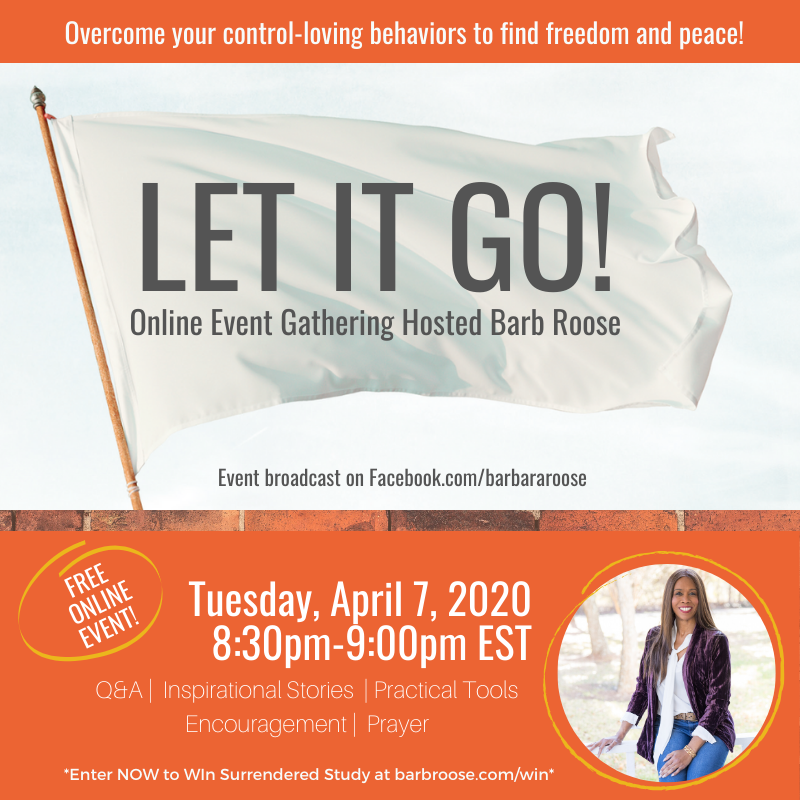
Need help letting go of control?

Working at Home? Five Rookie Mistakes to Avoid #COVID-19

Working at Home? Five Rookie Mistakes to Avoid #COVID-19

Working at home for the first time during COVID-19? Welcome to this new way of life.

As a former office dweller, I remember that first day when I didn’t have to go to the office. It was exciting, but I made some rookie mistakes that I want to warn you about.

1️⃣ Leave your pajama pants on.

Why? Because. Seriously, no one is going to see your legs during the zoom call.

2️⃣ Wear the same clothes as long as possible.

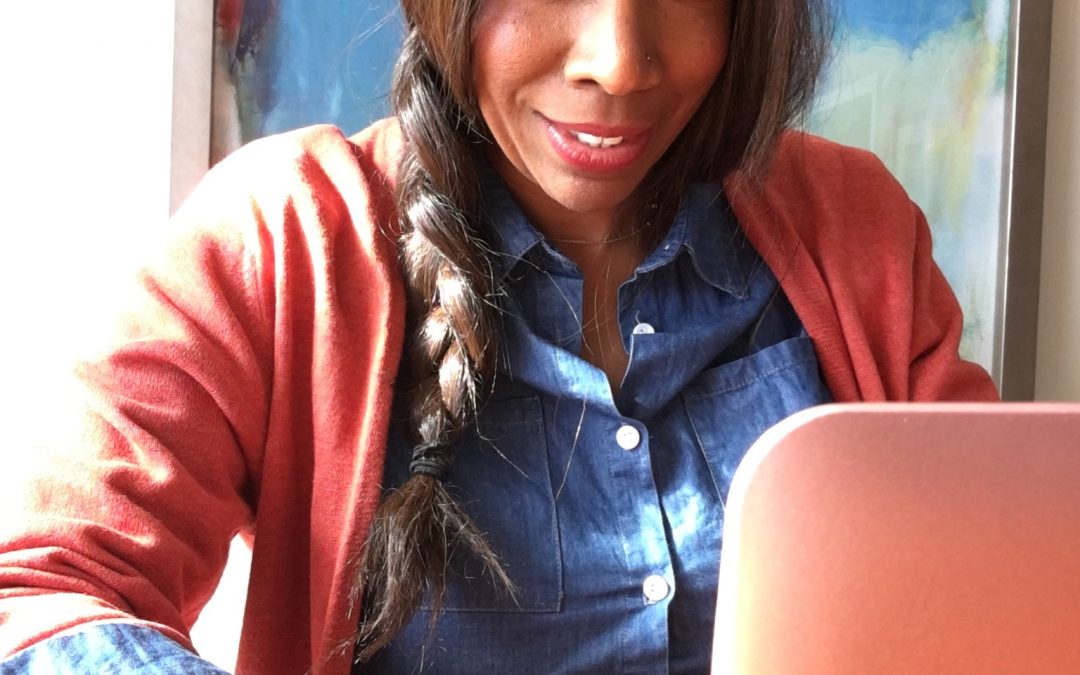
This picture here is staged. This is what people think that work at home people look like. It’s a lie.

I’m typing this post to you in a questionable t-shirt and pajama pants. That’s real.

Here’s the deal: You’re working at home now. Why dirty up more clothes than you need to? That’s extra laundry that you don’t need in your life.

3️⃣ Turn off ALL your phone notifications.

If you don’t, you will check one thing on Facebook and before you know it, two hours will have passed.

4️⃣ Beware your fridge.
Your fridge is going to talk to you all day long. There’s nothing to stop you from getting a snack every five minutes. Be your own boss on this and keep to your meal/snack schedule like you did at the office.

5️⃣ Let go of your expectations.

Repeat after me: I can’t control what’s happening, but I can stay calm and control how I handle this.

It’s an adjustment working at home. Be kind to yourself. Let go of your expectations of how you think that things should go.

PRAYER FOR TODAY: Dear God, thank you for the opportunity to keep working, even if it’s at home. Today, I open my hands and release my expectations of how I want things to go. I don’t have control, but I trust that You do. Help me to manage my attitude and works so that I can give people the same kindness and grace that You give to me. Amen.

Enjoy the at-home adventure, my friend.

🌸 COMMENT: Share your work-at-home pro tips for the newbies. Let’s help them out!
.
.
.
If you’re struggling with control-loving issues and you need tools to stop living this way, my new Surrendered study is for you! Pre-order now!

Link to Surrendered study: abingdonwomen.com/surrendered

3 Tools to Stay Calm In Scary Times

3 Tools to Stay Calm In Scary Times

What's happening in our world is unprecendented in our life time. While we've faced other difficulties like the September 11th attacks, various wars, swine/bird flu and others, the widespread coronavirus brings with it tremendous uncertainity. You aren't alone if you are stressed out and scared. Here's a Facebook Live broadcast where I teach you three tools to stay calm, sleep well and keep the right perspective during these scary times.

3 TOOLS TO STAY CALM, SLEEP WELL & KEEP THE RIGHT PERSEPCTIVE DURING SCARY TIMES!

1. Turn off your tv and limit social media

In Matthew 6:20, Jesus says "can all of your worries add a single moment to your life. There's nothing wrong with being informed, but if you're filling your mind with endless news and social media, you're mind can't handle all of that. Gather the facts and then focus on what you can control, which is focusing on God, taking care of yourself and your family.

2. God will provide what you need for TODAY!

A few verses later, in Matthew 6:27, Jesus reminds you that God already knows all of your needs. Early in the chapter, he taught his disciples to pray, God, give us our daily bread. My friend, God will provide for what you need for today. You don't need to stress out about what you don't have - whether your hours get cut, your lack of massive food stockpile or even if you lose your job. God can provide what you need today EVEN IF those things don't exist. Don't put your faith in your bank account, job or stockpile, trust that God will provide what you need.

3. Stay C.A.L.M

During the video I teach the CALM Technique from my Winning the Worry Battle book and it's also in my new Surrendered: Letting Go and Living Like Jesus Bible study, releasing on April 7. During these stressful and uncertain times, you can stop yourself from spinning out of control with this proven technique.

Questions:

1. What are some of the things that you're struggling with as our world deals with the coronavirus?

2. Which of Barb's three tips is most helpful for you?

3. What do you sense that God is calling you to think or do differently as a result of what Barb shared?

Do you struggling with control-loving behaviors?

Letting Go When God Says No

Letting Go When God Says No


On the warm summer day that young Cherise married her husband, she never thought that her marriage would end. Life wasn’t perfect, but they laughed together every day and loved each other through mistakes.

As Cherise looks back, she couldn't put her finger on when their lives changed. Even as she and her husband went on date nights and called each other everyday, there were some troubling shifts. Cherise realized that there were secrets being kept from her and unexplained behaviors causing more arguments.

She spent many sleepless nights trying to figure out what was going wrong. Did something happen during a particular fight? Did she do something wrong?

Most of her prayers during that time were simple, “God, please help!” or “God, please fix this!” No matter what she tried, a hidden addiction made itself known in difficult and heart-breaking ways. Their first marriage separation happened right before their twentieth anniversary, followed by a second separation four years later.

Although Cherise continued to pray for her marriage, a few years later her husband decided that he no longer wanted to be married. She was devastated but realized that God had blessed her years before by drawing her in close so that she discovered the blessing of His presence. That blessing sustained Cherise through an unanswered prayer that eventually turned into a heartbreaking “no.”

 Stories like Cherise’s aren’t easy to read. You may know from experience that these stories aren’t easy to live, either.  In fact, Cherise’s story is my story.

In our idealized version of Christianity, we like to think that we pray, God answers, and we live happily ever after. However, I believe that cemeteries are a reminder that God never wants us to dream of happily ever after while we’re living on earth because our broken, fallen world will rob us of that dream one way or another.

 Sometimes, the job isn’t saved or there won’t be a baby, even after all of the fertility treatments. At times we pray, but our spouse or our parent still abandons us. While God doesn’t cause our pain, sometimes, He allows our lives to travel down an undesired path. Even as there is blessing no matter what happens in our lives, that doesn’t mean that we don’t feel the searing pain. How do we deal with the raw emotions and let go when God seems to say no.

There’s a ritual that I’ve been doing once or twice a year for the past decade to help me to deal with the pain and keep my heart on the path toward hope, even as my heart hurts.

I call this ritual my annual “funeral”. One day each spring I pack a blanket, my Bible, a notebook, and a packet of tissues. Then I drive down to a beautiful river a few miles from my house. I find a secluded space so as not to draw too much attention to myself and lay out my blanket. For whatever reason, this exercise works best for me when I’m outdoors under the vast sky that reminds me of God’s glory (Psalm 19:1).

There’s three parts to my annual funeral: Be real, write down, and release. First, I’m real before God. Through my tears, I’m honest about the unanswered prayers, unmet expectations, rejection, disappointment and dreams that have died. Then, I write down what I’m grieving in my notebook. That makes it more real. Here are some of my funeral notebook entries:

I wished that I had more time with my dad…
God, I really prayed hard for You to remove the addiction from our home…
God, I’m really sad that those family members no longer speak to me…

Like the laments of the prophets, I cry out to God on paper, at times bitterly angry over what I’m grieving or what I’ve lost. It’s okay to cry and scream at God. Lots of people in the Bible have done it.

Once I empty myself of disappointments and dead dreams, I grab my Bible and read pre-marked verses on hope such as Jeremiah 29:11 and Isaiah 61:1-3.  These verses do not make me feel better immediately, but these words are a reminder of God’s glory, greatness, and power beyond my circumstances.

Finally, I pray and release the dreams or hopes that will not be. Through my tears I prayer something like this: I dreamed that (name dream), but that dream isn’t going to come true. I really wanted it, God! And it hurts. But I need to let that dream die. I need to mourn it and move it out of my heart so that You can fill the space with a new thing for me.

This powerful, yet simple ritual gives me a tangible way to release the weight of what could mess me up, slow me down or keep me stuck in the past. I want God’s blessing for my future, so I have to let go! 

Do you need to have a funeral for something in your life today? Be real before God. Write down your pain, anger, disappointment and hurt. Release it all to God and trust that He will heal your heart and soul with His love and mercy.

 Content excerpted from I’m Waiting, God: Finding Blessing in God’s Delay by Barb Roose


Pin It on Pinterest