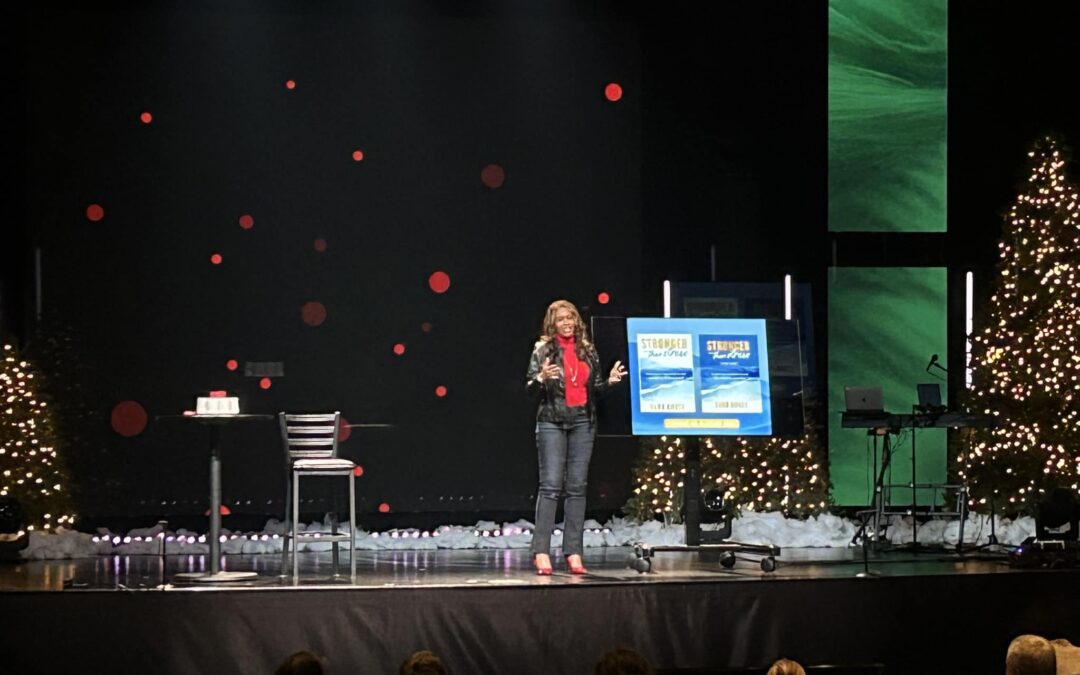
What You Need More Than the Magic of Christmas…

What You Need More Than the Magic of Christmas…

Not feeling Christmas-y? You aren't alone. 

As much as the songs tell us that it's the most wonderful time of the year and deck the halls, there are many of us who aren't feeling Christmas-y.

You know that you should be happy during this time of the year, but you are feeling sad or even like the Grinch.

How can you experience joy during the Christmas season when you're having a hard time?  Maybe you've lost a loved one, dealing with a health crisis or marriage issue. As someone who lived through many Christmas seasons under the dark cloud of alcoholism in our home, there were many years where Christmas time was hard and and sad.

But, today I want to share with you how God taught me how to experience joy during the holidays, even though there were many tears.

(By the way, if you want an in-depth message, check out my recent sermon below on finding joy during the holidays when it's hard.)

To be clear, joy doesn't mean that you have to minimize or ignore your grief or pain. Joy is an inner happiness that isn't dependent on what's going on in your circumstances. Joy is God's gift that helps you to hold onto hope and peace.

As you wonder how you can experience joy if you're not feeling Christmas-y, there is ONE thing that God wants you to remember:

Joy is found in the miracle of Christmas, not the magic of Christmas.

Most of us are waiting around hoping that the magic of Christmas shows up. We want that happy fa-la-la-la-la feeling flowing through our veins. We believe that we’ll feel the magic of Christmas when we find the right gifts, if all of the kids come home or if we hav enough money to do what we want.

But, too often our hope of the magic of Christmas is hijacked by the hard and broken in our lives. Even though we long for the magic of Christmas, grief, brokenness and hardship often overwhelms us.

Where does this leave you? Christmas is the reminder that Jesus came to earth to be the miracle that you need this Christmas in the midst of your sadness. What is that miracle?

The miracle of Christmas is embracing the Good News that Jesus left heaven to bring heaven to earth. He came into our broken world to save us from the penalty and consequences of the sin that is the reason behind why life is so hard for you today.

Jesus came because we NEEDED him.

You need him.

I need him.

Jesus came to be WITH us in our our human brokenness and show us the visible image of the invisible Creator of the Universe and Lover of our soul.

“Look! The virgin will conceive a child! She will give birth to a son, and they will call him Immanuel which means ‘God is WITH us.’” -Matthew 1:23 NLT

He came to earth so that you could experience WITHNESS with God. If you are a believer in Jesus Christ, savor this: God is WITH you, right now.

That reminder should uplift our hearts and thrill us! Remember the angel’s words to the shepherds in the field when Jesus was born:

But the angel reassured them. “Don’t be afraid!” he said. “I bring you GOOD NEWS that will bring GREAT JOY to all people. The Savior—yes, the Messiah, the Lord—has been born today in Bethlehem, the city of David! -Luke 2:10-11 NLT

Because Jesus came, you can experience great joy!

The joy of salvation,

The joy of knowing God,

The joy of freedom,

The joy of healing,

and more!  

Here’s the challenge: Instead of chasing or longing for the feeling of the magic of Christmas, shift your focus to expressing your gratitude for God's gift to you: Jesus. Focus on the Good News and all the reasons for joy that Jesus brings because he came into our world.

Need help to make that shift? Here's a beautiful song by Francesca Battistelli called “Behold Him” that will help you focus on the miracle of Christmas in Jesus. Listen here.

Did today's devotional help? Tell me how you plan to stay focused on the miracle of Jesus this Christmas? I'd love to hear from you! 

*If you think that this devotional will help someone who is having a hard time, share this via email or on social media.

BIG Thanksgiving Question: How Important Is It?

BIG Thanksgiving Question: How Important Is It?

It's Thanksgiving season and I’m coming in hot today with one question that I’m challenging you to consider before you get lost in the kitchen cooking or before you arrive at family dinner.

Today’s question: How Important Is It?

Holidays like Thanksgiving can bring out what’s beautiful AND what’s broken in our relationships. To help you avoid the emotional roller coaster, “How Important Is It?” gives you a chance to invite God to prepare your heart for the holiday. It can also help you to avoid saying or doing something that you regret.

If you struggle with control-loving behaviors like nagging or helicoptering, this is a good question to tape to your refrigerator as a reminder. If you tend to lose your temper or you are highly sensitive, this question can help you deescalate your emotions, especially if your family dysfunctions run hotter than the oil that you're using to fry your turkey.

To process through this question, I've included four prompts that you can journal about, process with a friend and pray about!

  1. What will you value MOST this Thanksgiving?

If giving thanks to God is your top priority on Thanksgiving, you'll be less likely to blow lesser matters like an over-baked casserole or plugged toilet out of control.

On Thanksgiving morning, take time to declare this prayer: “God, the most important thing for me to do today is focus on giving thanks to You."

If you keep an attitude of gratitude, you'll be less likely to let little things frustrate you.

  1. What Expectations or Outcomes Do You Need To Surrender

The same things tend to upset us every Thanksgiving, whether it's the family member who always shows up late, the uncle who won't stop talking politics or the feeling that you're doing 90% of the work while everyone else is standing around.

Practical Exercise

Step One: List what frustrates you every Thanksgiving. Then, add in the expectations or hopes that you have for this year.

Step Two: Draw a line through anything that you can’t control.

Step Three: Surrender those matters by praying and giving them over to God using a simple prayer adapted from my Surrender Bible study:

God, I am not in control of others or outcomes. I give ________________ over to You. I can’t, but You can, so I will let You be God over this matter. Amen.


  1. Do You Want to Be Right or Do You Want to Convey God's Love in Your Relationships

Thanksgiving is the time for us to be grateful for how God saved us from our sins, not silently or openly criticize or shame those who might be struggling with sin around us.

Just like Peter boasted that he’d defend Jesus before denying Christ three times (Luke 22:61), you must be on guard not to become prideful in your faith. This happens when you look at the people around you and like the pharisee in Jesus’ parable (Luke 18:11), you look at them and think “Thank God that I’m not a sinner like them.”

Where do you need to stop the unloving type of judging? Ask God to fill your heart wit His love and renew your commitment to praying for the struggling and messy lives around your Thanksgiving table.


  1. Giving Yourself Permission to NOT Respond

SPECIAL ANNOUNCEMENT: Some people like to stir the pot and argue. You don't have to be one of them. You have permission to NOT answer a conversial question or take sides in a debate.

How do you extract yourself a potential  verbal fight? In a word: Redirect. Here's what it sounds like:  “I’m glad that we are here to share Thanksgiving, but I don’t want to talk about (topic) today. I’d rather hear more about what you’ve been enjoying in life or what you’re looking forward to this holiday season."

Which prompt(s) resonated with you today? Where do you need to consider the question "How Important Is It?" for your Thanksgiving holiday?

BIG Thanksgiving Question: How Important Is It?

Pre-Thanksgiving Question: How Important Is It?

With four days to go until Thanksgiving, I’m coming in hot today with one question that I’m challenging you to consider before you get lost in the kitchen for the next few days cooking or before you pack to leave town.

Today’s question: How Important Is It?

Holidays like Thanksgiving can bring out what’s beautiful AND what’s broken in our relationships. To not avoid the emotional roller coaster, “How Important Is It?” gives you a chance to invite God to prepare your heart for the holiday. It can also help you to avoid saying or doing something that you regret.

If you struggle with control-loving behaviors like nagging or helicoptering, this is a good question to tape to your refrigerator as a reminder. If you tend to lose your temper or you are highly sensitive, this question can help you deescalate your emotions, especially if your family dysfunctions run hotter than the oil that you're using to fry your turkey.

To process through this question, I've included four prompts that you can journal about, process with a friend and pray about!

  1. What will you value MOST this Thanksgiving?

If giving thanks to God is your top priority on Thanksgiving, you'll be less likely to blow lesser matters like an over-baked casserole or plugged toilet out of control.

On Thanksgiving morning, take time to declare this prayer: “God, the most important thing for me to do today is focus on giving thanks to You."

If you keep an attitude of gratitude, you'll be less likely to let little things frustrate you.

  1. What Expectations or Outcomes Do You Need To Surrender

The same things tend to upset us every Thanksgiving, whether it's the family member who always shows up late, the uncle who won't stop talking politics or the feeling that you're doing 90% of the work while everyone else is standing around.

Practical Exercise

Step One: List what frustrates you every Thanksgiving. Then, add in the expectations or hopes that you have for this year.

Step Two: Draw a line through anything that you can’t control.

Step Three: Surrender those matters by praying and giving them over to God using a simple prayer adapted from my Surrender Bible study:

God, I am not in control of others or outcomes. I give ________________ over to You. I can’t, but You can, so I will let You be God over this matter. Amen.


  1. Do You Want to Be Right or Do You Want to Convey God's Love in Your Relationships

Thanksgiving is the time for us to be grateful for how God saved us from our sins, not silently or openly criticize or shame those who might be struggling with sin around us.

Just like Peter boasted that he’d defend Jesus before denying Christ three times (Luke 22:61), you must be on guard not to become prideful in your faith. This happens when you look at the people around you and like the pharisee in Jesus’ parable (Luke 18:11), you look at them and think “Thank God that I’m not a sinner like them.”

Where do you need to stop the unloving type of judging? Ask God to fill your heart wit His love and renew your commitment to praying for the struggling and messy lives around your Thanksgiving table.


  1. Giving Yourself Permission to NOT Respond

SPECIAL ANNOUNCEMENT: Some people like to stir the pot and argue. You don't have to be one of them. You have permission to NOT answer a conversial question or take sides in a debate.

How do you extract yourself a potential  verbal fight? In a word: Redirect. Here's what it sounds like:  “I’m glad that we are here to share Thanksgiving, but I don’t want to talk about (topic) today. I’d rather hear more about what you’ve been enjoying in life or what you’re looking forward to this holiday season."

Which prompt(s) resonated with you today? Where do you need to consider the question "How Important Is It?" for your Thanksgiving holiday?

The Blessing of Being Grateful in Hard Times

The Blessing of Being Grateful in Hard Times

It’s the first week in November – which means that some of you have already started watching Hallmark Christmas movies and drinking your peppermint mochas. I like to hold out until after I finish Thanksgiving dinner. Isn’t there a commandment that says Thou shalt not watch Christmas movies or listen to Christmas music until the day after Thanksgiving? Ha!

Since it’s November, I decided to tackle a tough question:

How can you be thankful even when you aren't feeling it?

Right now, our world feels like a giant dumpster fire with a side of stinky cheese. When the Apostle Paul wrote in 1 Thessalonians 5:18 “be thankful in all circumstances” did he know how expensive groceries would be? Did he have any idea of how scary it is to watch images of the war overseas? How can we be thankful when we’re seeing so much going wrong in our country? Perhaps you’re wondering if Paul knew how painful it’s been for you to deal with your family issues, healthy struggles or you’re dreading the holiday season to come.

Yet, what if being thankful when life is hard is exactly what God calls you to do today? 

Today, I’m sharing a story of Jesus giving thanks at a time when most of us would question God or be made at God instead. As you read today’s devotional, I pray that you will see God’s heart and most of all, the blessing that God gives when you choose gratitude in hard times.

Here we go:

In Mark 14, Jesus sends out the disciples to gather up preparations for Passover. Since Jesus and the disciples traveled together from town to town, they didn’t have a fully stocked kitchen or pantry to work with. Then, Jesus and the disciples gathered around a table for what Jesus knew would be their final meal together while he was on earth.

As they were eating, Jesus took some bread and blessed it. Then he broke it in pieces and gave it to the disciples, saying, “Take it, for this is my body.” And he took a cup of wine and gave thanks to God for it. He gave it to them, and they all drank from it. And he said to them, “This is my blood, which confirms the covenant between God and his people. It is poured out as a sacrifice for many.” -Mark 14:22-23 NLT

Look at the underlined words. Notice Jesus’ actions here. He blessed the bread before he tore it. He gave thanks to God before sharing the wine. The bread and wine symbolized the brokenness and suffering that was to come in Jesus’ life. Yet, he still gave thanks anyway. Jesus even gave thanks while his future betrayer Judas was sitting right at the table with him. Some of you have felt the sharp stab of betrayal or difficult people. Jesus gave thanks right in the middle of it, not waiting until later.

There’s a phrase for when we give thanks to God when it’s hard. In her best-selling book 1000 Gifts, Ann Voscamp identifies Jesus’ act of giving thanks before suffering the “hard eucharisteo” (yoo-khar-is-the-o). This is known as the “hard giving thanks.” This is the place where we thank God for His goodness, love, and grace, even as our circumstances don’t look or feel good to us in the moment. This is where we might be in a hard place, but we do not let ourselves develop bitter or hard hearts.

As one who herself said that she “woke up for years of mornings wanting to die” from her sadness and suffering, Voscamp experienced the following spiritual breakthrough that came from her reflection on Jesus’ words at the Last Supper. Her words inspired me and I hope that they inspire you as well:

Deep chara joy is only found at the table of the eucharisteo – the table of thanksgiving. As long as thanks is possible, then joy is always possible.” (pg 32)

Even at that last supper before he would be crucified, Jesus gave thanks because he knew that none of life’s hardships could steal the joy of what God had waiting for him. Here’s what the writer of Hebrews recorded:

“We do this by keeping our eyes on Jesus, the champion who initiates and perfects our faith. Because of the joy awaiting him, he endured the cross, disregarding its shame. -Hebrews 12:2 NLT

God doesn’t want you to base your hope, peace, or joy on your circumstances because He knows that this broken world will break your heart. However, God knows that when you look for and call out God’s goodness, love, and mercy in your life, expressing that gratitude for God is what lifts your heart and fills you up – even when life is hard.

Today’s question: Do you need to shift your eyes from your circumstances back toward God? Where can you give thanks for His love, goodness, grace, and mercy in your life? 

God Is Not Surprised Or Stressed These Days…

God Is Not Surprised Or Stressed These Days…

I saw a phrase on Instagram last week that caught my attention: empathetic distress.

Psychologist Adam Grant, who is one of my favorite personal development thinkers, explained that empathetic distress is when we see someone hurting and we feel are unable to help. Grant pointed out that empathic distress can lead to withdrawal (isolation) because of overwhelm and exhaustion.

When I re-shared Adam’s post in my Instagram stories, someone sent me a note and said, “YES! This names what I’ve been feeling the past two years.”

Today’s devotional is a shoutout to those of us who have big hearts, but our hearts are filled with heartache for what’s happening in our lives or in our world.

God calls us to care about others, but we must be wise and discerning because we cannot actively care about everybody all the time, especially at the same time. Some of you need to hear this today: Only God can shoulder all your family’s problems, our world’s social issues, world conflict, and the spread of evil. You aren’t God and you weren’t built to carry that load.

What are some clues that you might be in empathetic distress?

  1. You have a big heart for others but caring deeply for one person’s suffering or feeling distress for lots of people in pain is exhausting you.
  2. You’re overwhelmed because you see so many problems and you’re tempted to shut everyone and everything out.
  3. You have a heavy heart all the time and you notice a lack of God’s joy or peace.

If you recognize one or more of these, perhaps today’s devotional is a prompt for you to stop and reflect. I’m going to share a powerful reminder from Jesus and four practical tips for us today.

In Matthew 6, Jesus taught a large group of people from all walks of life, followers, and non-followers in his Sermon on the Mount. There was one portion of his sermon where he addressed the attentiveness of God:

 Look at the birds. They don’t plant or harvest or store food in barns, for your heavenly Father feeds them. And aren’t you far more valuable to him than they are? Can all your worries add a single moment to your life? -Matthew 6:26-27 NLT

Jesus reminds us that God is paying attention to everything happening in our world. Think about this: God pays attention to the birds that don’t have jobs or eternal souls, and He still cares about them. Jesus also taught that God pays attention to the flowers in the field that don’t even last long, but God still cares for them. 

In a world where it feels like we need to worry about everything, Jesus tells us not to worry because it adds nothing to the quality of our lives. Jesus taught this message to remind us that only God cares, but God is ridiculously in control, friends.

Nothing is happening in your life, your loved ones’ lives, or in our world that escapes God’s notice. He sees the mess and get this: God’s not worried about it. He’s not missing ANY sleep and He is not wringing His hands trying to figure out what to do. 

So how do we balance caring about others or the problems in our world, but not letting ourselves get carried away into empathetic distress? 

Here are four practical steps to guide you in demonstrating care and concern without carrying burdens that you aren’t supposed to:

  1. Be wise about how much news content you consume. Watching endless news coverage will only grow your fear, not your faith.
  2. Pray! God is at work, friends. We may not be able to see it, but faith prompts us to believe it.
  3. As you pray, be mindful of what God puts on your heart to do - but you do not have to do everything. Leave room for people to need God instead of you potentially trying to be God by handling all of the problems and issues. Here are some supportive things that you can do without fixing problems:  you can send encouraging messages, ask them how you can pray for them, support them with a meal, or just sit and let them talk about their struggles. 
  4. Surrender your fears and worries to God because YOU need it. Practically, a next step would be to let go of your worrying, by changing your worry words to worship. What if you started worshipping God each time you noticed that you were worrying? Which one will be healthier for your heart and mind? You can worship in prayer or listen to music. I have a great playlist on Spotify if you need music recommendations.

What do you think about empathetic distress? Does that describe how you’ve been feeling lately? If you’ve been encouraged or you recognize that God’s prompting you to do something, tell us about it.  

Saying Less to Let God Do More in Your Loved Ones’ Lives

Saying Less to Let God Do More in Your Loved Ones’ Lives

Have you ever sensed that God was moving you out of the way so that He could work in someone else's life? 

Let me tell you a story…

Last Monday, I woke up with a cold. By late afternoon, I could barely speak. By evening, my voice was gone. Just like that. Completely gone.

After I shuffled my schedule around to postpone some meetings, I still had one other situation happening last week. My 23-year-old daughter needed to move. This is my NICU nurse daughter who lives in my eight-apartment building. For two years, she’s lived in a one-bedroom apartment on the first floor, but she was moving up to the apartment directly underneath me.

Here’s how God may have moved me out of the way…

Monday night, I moseyed downstairs to her apartment and thought, “Yep. She needs my help.” Boxes were everywhere and Abbie looked overwhelmed. Inside, I smiled. She SO needs me.

I was wrong. When I typed out on my phone, “Would you like me to help you figure this out?” She shook her head and said, “No, Mom. I got this.”

What? Did she see what I saw? If I had a voice, I would have disagreed with her. 

It was hard watching Abbie run her hands through her hair, blow out frustrated breaths, or look wide-eyed at the jumble of boxes, bags and clothes all over her apartment. I could tell she had no idea of what to do. If I'd had voice, I would have tried to convince her to follow my moving advice. After all, I knew how to fix this. She might have even listened, but she would have been annoyed as well. Even though Abbie didn't know what to do, she didn't want me to solve her problem. 

However, since I had no voice and Abbie didn’t want to keep stopping to look at what I typed, I had to keep my opinions and wisdom to myself.

Guess what?

Over the next two days, Abbie figured it out. She moved. She even did it without my advice. Shocking, right?! Since I wasn’t feeling well, I could only help carry boxes for a little time each day. She struggled, but she also succeeded.

When we see our loved ones frustrated or struggling what do we do? We want to come to the rescue. For us, love means jumping in and giving (unsolicited) advice, fixing the problems or nagging them to do things our way, because we think our way is best.

Is trusting God with your loved ones hard for you? Take a journey with me through the Surrendered: Letting Go and Living Like Jesus Bible study.

We’ll walk with Jesus through his wilderness experience and discover the power of letting the Holy Spirit lead us. You’ll learn how to release control-loving behaviors and experience God peace.

Should that be our first response? Could love also be letting them figure it out? When we jump in the way, we can rob our loved ones of what will make them stronger, wiser, and more importantly, help them see that they need God. It’s often in hardship or stress that people turn to God. A long time ago my therapist told me: Make sure that you don’t get in the way of your loved one’s need for God.

Here’s an observation: What if we said less to our loved ones to give God space to do more in their lives?

Saying less to your loved one doesn’t mean that you go silent. Sometimes concern needs to be expressed or confrontation is needed in certain situations. But for most  matters, we need say less to our loved ones to make room for God to do more. He’s the one who knows best!

Even as I saw the stress and frustration on my Abbie’s face, I could also see her discerning the things she was throwing out and keeping. I imagine she was counting the cost of the things she chose to keep or let go. As she dealt with some adulting tasks that she’d postponed, I could see the resignation on her face that she would do better in the future.

While I desired to smooth Abbie’s bumpy path, could it be that God allowed my voice to disappear to create space for Abbie to learn deep, meaningful life lessons that my moving advice might have caused her to miss? I was so worried about how she would move her stuff, but I can see now that God used that experience to move wisdom into her heart.

I saw this verse and thought it would be a fitting way to end today’s devotional:

Proverbs 17:27 says this: “A truly wise person uses few words; a person with understanding is even-tempered.”

This can apply to how you speak to your spouse, kids, friends, co-workers, elderly parents and anyone else. Ask God if you should pray to Him before speaking to them.

What do you think? Is there anyone or anything that comes to mind for you? If so, I’d love to hear about it.

 P.S. My voice returned on Wednesday. Thank you to everyone who responded on social media and prayed for me.

Pin It on Pinterest