I’ve spent my entire professional life and at times, large portions of my personal life as the lone chocolate chip in the cookie or the only brown face in an all-white space.
I grew up in a middle-class to upper-middle class community that was beyond 90% Caucasian. In my childhood, our family lived on the side of town with all of the other black families, in a series of large apartment complexes far from the more upscale housing.
By the time that I entered junior high, my parents moved us across town to a house where there was only one other black family in the entire neighborhood.
It was during this same time that I decided to take the advanced English class at school. I loved writing and a beloved sixth grade teacher named Pete Frazier told me that I was a good writer and encouraged me to work hard at getting better. However, saying “yes” to taking advanced classes meant that I would have to leave the safety of the few other black kids at my school (99% of whom were my cousins).
As a 12-year old kid, I felt conflicted. I wanted to say "yes" to the academic challenge and go where no black kid had gone before. Yet, I feared leaving my safe community of cousins who had my back. I wondered if they felt that my abandonment meant that I'd no longer have their backs?
I didn’t have language for it back then, but my struggle was whether or not my decision to be a brown face in a white space made me a token or a trailblazer. I’ve wrestled with this question in varying degrees of intensity for the last 30 years of my life.
What do I mean by token or trailblazer?
- A token is the lone person of color in a friend group, office or other gathering. His or her non-threatening presence allows the majority to feel good about themselves. While the token seeks a specific goal or desired connection, his or her token presence may preclude the group from addressing potential racial blindspots, bias or begging questions like “Why is he or she (token) always the only one?”
- A trailblazer is a person of color who goes where none or few have gone before to specifically break down racial barriers. Trailblazers call out and speak out whenever they see microaggressions or racism. A trailblazer’s presence in an office or association is often tense, at best tolerated. Their personal experience as the only brown face in a white space is often painful, isolating and discouraging.
For every black person who has been the “one black friend” at the birthday party, in their office or social club, that question of token or trailblazer teeters on a fine line, like whether or not a cookie is well baked or if it's now burning.
I can't tell you how many times I've asked myself, both as a token and trailblazer: Is this even worth it?
Recently, Ruby Bridges turned 65 years old. If you don’t know who she is, click here. It’s remarkable that as a young girl, federal marshals walked her into school so that she'd be the first brown face in a white space. Ruby's courage made room for other brown faces to move into better funded white academic spaces. and institutions.
I wonder about how young Ruby felt once the spotlight faded? How hard was it looking around and wondering whether or not it was worth it? Did she wonder if she was a token or a trailblazer, too?
In 1964, James Meredith wrote a letter to the Kennedy administration after he’d applied to attend the University of Mississippi and was denied admission because of segregation laws. He asked the president only one question: Am I a citizen or am I not a citizen.” It took action by the Fifth Circuit of the US Court of Appeals and US soldiers to hold back a mob and accompany Meredith onto campus where he registered as a student and became the first black American to graduate from Old Miss as well.[1] Clearly, Meredith was a trailblazer, but for some, I’m sure that he filled the token spot as well.
Why this discussion about tokens and trailblazer? Today’s post exists because there are more brown faces moving into white spaces for the first time. I want to offer some language and insight into what I didn't realize or understand years ago.
Also, that token or trailblazing colleague, neighbor or staff member may not come right out and share some of this stuff, so I want to say it for them until they find out if you're safe enough for them to use their voice. Until then, the following is just for you to listen and understand. No need to try to fix. Really.
Let’s start with a few basics:
The Cost of Being a Token or Trailblazer
- Both tokens and trailblazers pay a cost for their presence.
- Tokens often trade their identity for security in that unsafe space.
- Trailblazers keep their identify, but often lose security. For example, James Meredith was eventually shot. (He survived and spent his life as well-known civil rights advocate.)
The Key to Surviving as a Token or Trailblazer
For me, the key to knowingly accepting an invitation to the sole chocolate chip in a beigy-space cookie is knowing who I am and the power that I have in my own agency.
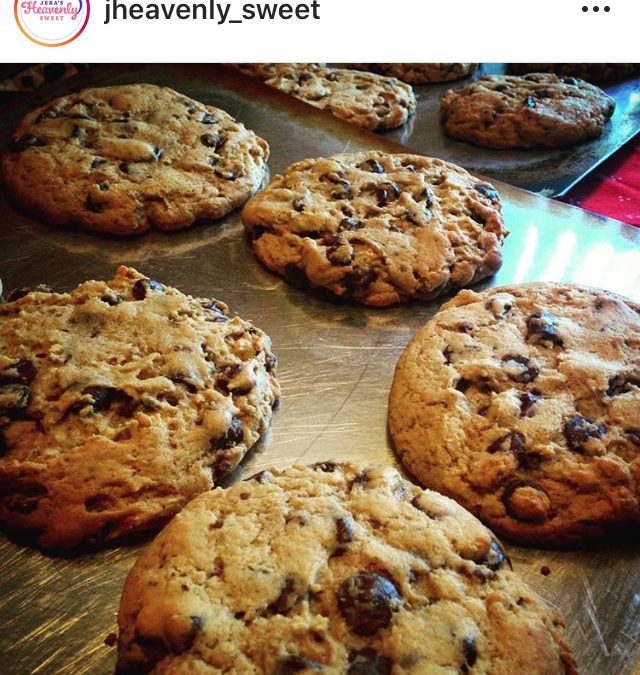
Let's talk about chocolate chips for just a moment. Um, yum! They’re rich, velvety, full of flavor and add depth and an appealing contrast to the vast landscape of the cookie dough. Just like the more chocolate chips, the richer the experience, I’d like to think that the same can happen where majority culture sees that an uninterrupted beigy-space could excel and achieve more if they add some chocolate chips to the mix. (P.S. Today's post photo is from my friend, Jera's Heavenly Sweet bakery. She makes the best chocolate chip cookies in the world!)
As a black woman, I have a lot to offer in who I am, how I’ve been raised and the strength that I’ve gained because of the rich color of my skin.
If I have a great opportunity, but suspect that I might be a token, I can exercise my power to say “yes” or “no” depending on whether or not what I will receive outweighs the cost. I also have to accept that my token presence may soften any tension for decision makers to have the necessary hard conversations about organizational blindspots when it comes to racism.
On the flip side, in times when I’m a trailblazer, I have to accept that I can’t control others or outcomes. My presence may not change anything, but I can’t pretend like my presence can control others either. It takes time for systems to change. And while it’s been well past time for change to happen, it’s still going to take time. Frustrating, but true. So, I’ve must ruthlessly pursuit emotional and spiritual wellness to offset the stress of being in an environment that may only tolerate me.
Questions that Tokens and Trailblazers ask…
Whether it’s the lone black person in the C-suite, a company, a school or friend group, when you’re the only chocolate chip in the cookie, you ask yourself hard and painful questions like this:
- Do the people around me believe that I’ve earned this or that I was picked only because I'm black?
- Will they accept that I’ve achieved this or will they tolerate it?
- If I ask for my rightful place, but will they let me stay or will they make my life miserable?
- Do I make waves when something is wrong or keep my head down so that I don’t mess it up for the next black person that might come along?
- Am I safe enough to bring my real-est self?
...Like 30 years ago when I was voted homecoming queen my senior year, making me the first black homecoming queen in our school’s 150+ year history. I wondered, Will they accept that I’ve achieved this or will they tolerate it?
...Like 20 years ago when I was hired by one of the world’s largest pharmaceutical companies during their expansion. I wondered, Do the people around me believe that I’ve earned this or that I was picked only because I'm black.
(Even after I won the company's top sales award my first year, that question still persisted.)
...Like when my senior pastor courageously extended an invitation for me to join the teaching team at my church back in 2005 – an almost unheard of occurrence for a black woman back then to become a teaching pastor at one of largest and fastest growing churches in the country. I wondered, Do I make waves or keep my head down so that I don’t mess it up for the next black person that might come along?
Here’s where I’ve landed…
- When it comes to whether or not I’m a token or a trailblazer, I’ve accepted that I’ve been either or and both, depending on my goals, convictions and opportunities. Even now, as a full-time speaker and author, I still have to navigate the tension between the two.
- I’ve given myself permission to let go of the stigma or self-judgment that comes from being a token. Black people have demonized the term and at times, rightfully so. Yet, someone has to go first and often, the first is the only for a long time.
- If I am a token or a trailblazer, I must hold onto my identity and integrity as well as let go of resentment and bitterness.. When I can't, then it's time to go.
COMMENTS: What do you think about these concepts of “tokens” and “trailblazers”? What makes you think or uncomfortable. If you’re a person of color, what’s been your experience? So, you're welcome to share your thoughts in the comments below. Be respectful. Be kind.
[1] Cara Meredith, The Color of Life: A Journey Toward Love and Racial Justice (Grand Rapids, MI: Zondervan, 2019), 61-63.