by Barb Roose | Feb 25, 2017 | Reflections

By Barb Roose
Have you seen the movie, Hidden Figures? I’ve talked about it so much that someone should cut me in on the profits for my publicity work – ha!
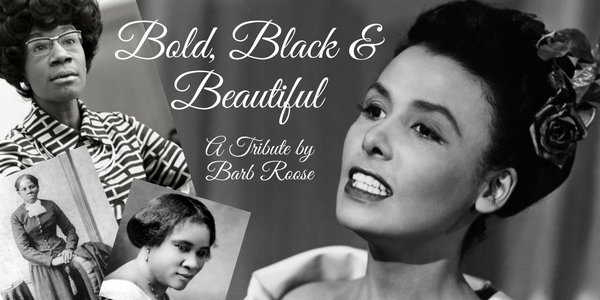
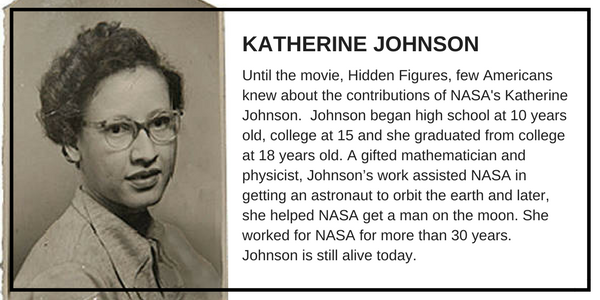
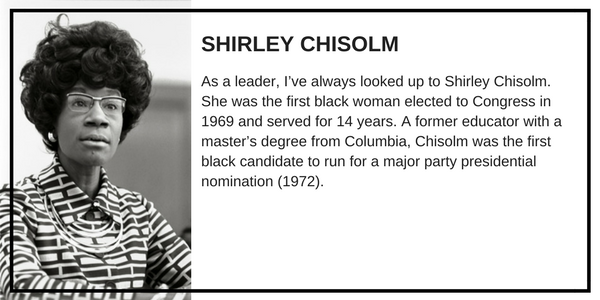
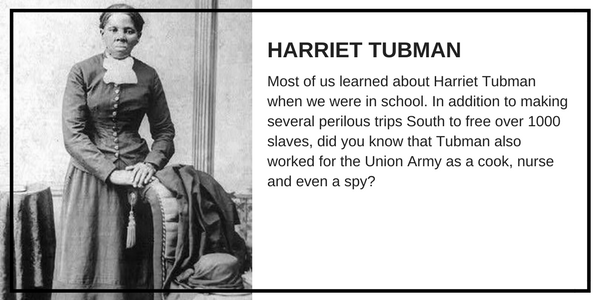
Not only did the movie capture my heart, the movie also reminded me that there are hundreds of not thousands of hidden figures in the black community. This matters to me because those stories don’t surface that often. I am grateful for the achievements of modern day African-Americans, which we hear about all of the time. Yet, I need to know about the contributions of those who helped build our country and those who elevated my way of life.
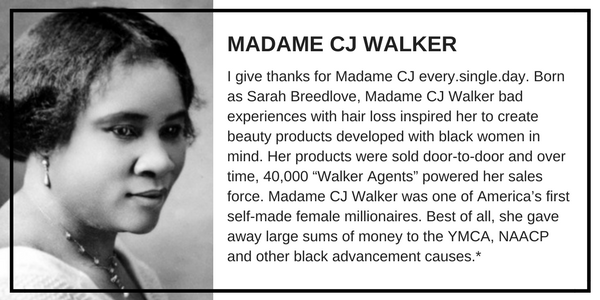
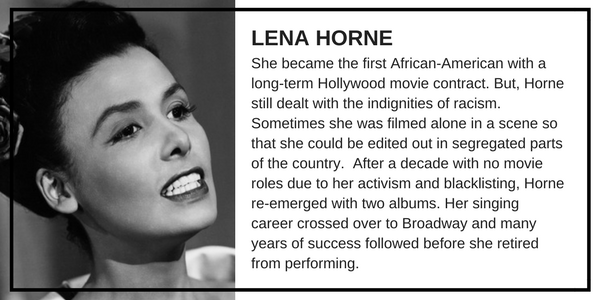
So, here’s my list of seven bold, black & beautiful African American women who’ve inspired my life. This isn’t my entire list, but I hope that these women inspire you, too. I’d love for you to tell me your list of bold, black & beautiful women. Let your list in the comments below. I’d love to hear from you!

LOOKING FOR MORE BLACK HISTORY MONTH EXPERIENCES? Check out my most recent Better Together podcast featuring Cara Meredith, daughter-in-law of civil rights icon, James Howard Meredith. We’re talking about racial justice and being mamas of bi-racial children in or racially-divided country. Listen to my interview below:
by Barb Roose | Jan 9, 2017 | Christian Living/Discipleship, Women's Topics
by Barb Roose

I knew something was up when I received a link to the same blog post from several women’s Bible study leaders from around the country. The writer sent out a plea to women’s ministry leaders asking them to stop telling women that they are beautiful if that beauty message wasn’t tied to the gospel. Her blog connected with women across the country. What caught my attention were the comments from her readers. There were a lot of opinions and negative feelings out there about how beauty was addressed at women’s conferences and how beauty is taught by women’s ministry leaders.
As a communicator who speaks and writes about Christ-centered identity and beauty, I’ve heard women’s ministry leaders question whether beauty is a worthy spiritual topic. Some even rate beauty as watery spiritual milk rather than stick-to-the-bones spiritual meat. There’s a confusion about how we should talk about beauty, so without a clear way forward, women’s ministry leaders may settle for the simple “You are beautiful” cheer with no foundation or refuse to address the topic of beauty for fear of criticism from other Christians.
In either case, I fear that those two positions could actually hinder the effectiveness of women’s ministry now and into the next generation.
As long as we’re silent or hostile about talking about beauty, Satan will own the beauty dialogue. He already does. We’re seeing the results of his deception everywhere. There’s nothing fluffy or cute about beauty. The topic of beauty has become a bloody battlefield. Young girls are being bullied to death over their looks or weight. The lure of online fame compels our daughters and granddaughters to mimic the lifestyles of those that our culture worships and adores.

So, what should we be teaching women, both Christian and non-Christian women, about beauty? I believe that there are two things we must teach:
First, beauty is a topic that is wholly biblical!
Let’s stop treating the topic of beauty like an ugly scriptural stepsister. Did you know that the words “beauty” and “beautiful” appear in the Bible over 100 times?* In fact, beauty is a quality associated with the character of God, meaning that He has no ugliness or distortion.
One thing I ask from the Lord, this only do I seek: that I may dwell in the house of the Lord all the days of my life, to gaze on the beauty of the Lord and to seek him in his temple. –Psalm 27:4 NIV
The Bible talks about beauty on many levels and its impact on our lives. At its worst, we see how beauty fueled Rachel and Leah’s baby daddy rivalry and caused Abraham to fear for his life. At its best, God used beauty to influence the selection of Esther as Queen as well as her gentle and quiet inner beauty to gain favor with the king to save the Jewish people.
For a topic that is written about in many ways in scripture, it feels like we’re more in touch with culture’s perspective on beauty than God’s perspective. We define beauty by what we see in advertisements, social media “likes” and celebrity chatter. As Christian women, we find all of those expressions of beauty distasteful. But we don’t really have a good scriptural foundation, so we declare beauty a bad word.
Last week I interviewed Christian fashion expert Shari Braendel on my Better Together podcast. Shari is a bold woman of faith and considered America’s leading voice in fashion, beauty and dignity for Christian women. Yet she has been criticized by Christians who don’t believe that outer beauty is a spiritual topic that Christian women should care about. Regardless, over the past 12 years, God has used Shari to speak hope, truth and freedom to thousands upon thousands of women.
FULL DISCLOSURE: I’m a Christian women’s speaker and author who stands on platforms around the country and boldly tells women that they are beautiful because God created them. It’s biblical and needs to be said. Why? Because most women have no idea how God sees them! Far too women see themselves dipped in ugliness, guilt and shame over sin-related life experiences—some at the hands of another.
Women’s ministry leaders, we can tell a woman that she’s beautiful AND tell her that she is in need of a Savior. We can tell her about who God created her to be and how Jesus came to die so that she could experience life to fullest without guilt or shame. We can and should give both of those messages and repeat them as often as possible. Just the same as we never stop saying Jesus loves you because we think people should get it by now, we can never assume that a woman always remembers that her beautiful identity is solidified in God.
Secondly, when the Bible talks about beauty, it’s addressing both inner AND outer beauty.
When it comes to beauty, what’s on the inside does matter most, but it’s not the only thing that matters.
We’ve gotten in a habit of elevating inner beauty because of a few verses (Proverbs 31: 30 and 1 Peter 3:3-5) and pretending that we don’t care about outer beauty or that it’s bad. But God cares about both.
Who created the sunsets, flowers and rainbows that we obsessively photograph and post to social media? God created them to show us what He thinks about physical beauty.
In Genesis 1, God creates our physical world and the first humans. How often do we see the phrase “God saw that it was good” in this chapter? When God created the sun, moon, stars, trees, flowers and animals, God looked at their physical structure. The Hebrew word for good is towb, which is translated beautiful.
And God saw that it was beautiful.
In a world where women are targeted with 400-600 media advertisements a day, we cannot forget that God is the Creator of beauty, both inner AND outer beauty.
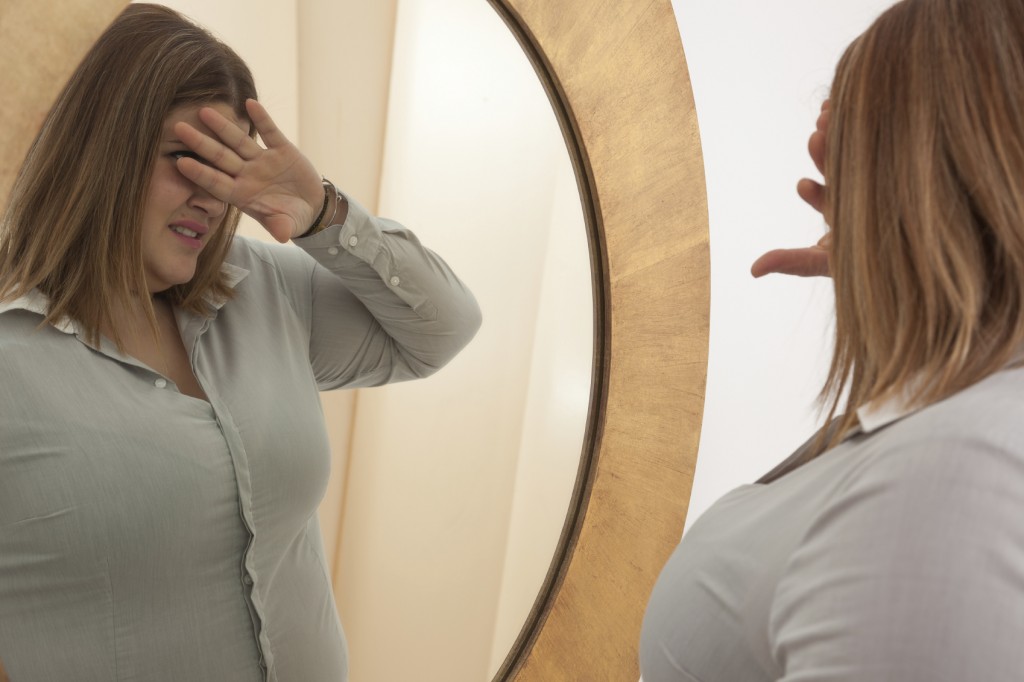
And what about us? What about adult Christian women? How many of us are silently bearing the scars and shame of outer-beauty issues? Sister, I know that you love Jesus. But I also know that you’ve probably stood in front of the mirror at one time or another whispering that you are “fat” or “ugly.” If God were standing next to you, how would you explain that?
So, here’s an incredible opportunity for us to reach women with the hope and freedom of Christ IF we remember the big picture:
Talking about beauty is an open door to talk about redemption and restoration.
In Matthew 6, Jesus teaches a crowd on a hillside. He uses the beauty of flowers as a teaching tool to remind us of how God sees us and cares about our physical needs. Jesus also refocuses our perspective:
31 So do not worry, saying, ‘What shall we eat?’ or ‘What shall we drink?’ or ‘What shall we wear?’ 32 For the pagans run after all these things, and your heavenly Father knows that you need them. 33 But seek first his kingdom and his righteousness, and all these things will be given to you as well. –Matthew 6:31-33
Raise your hand if you’ve ever felt angst, guilt or shame over “What did I just eat or drink?” or “For the love, my pants are too small. What am I going to wear today?”
First, Jesus acknowledges the struggle. Then, He tells us what to do. For every struggle, Jesus shows us the solution: See God first.
There’s a lesson in that for women’s ministry leaders, small group leaders and all mature Christian women: Acknowledge your struggle. Share Jesus’ solution.
How can the women in our churches and communities come to Christ and confess their guilt and shame if we’re silent about ours?
Maybe this is why a certain segment of women aren’t registering for conferences or retreats. When a broken woman attends an event and all she can see are well-dressed, plastic-smiling women that look shiny and perfect, she’ll struggle to relate and leave still starving for connection.
If you plan women’s events, remember that women attend conferences because they want to find solutions for what’s missing, broken or changed in their lives.
Women don’t want perfect. Women want real. Real answers. Real stories. Real women who aren’t trying to market their Pin-Perfect lives.
If you want to draw women into your next women’s event, then think about what the women in your church and community are praying about. Where are they begging God to show up in their lives? Match up those prayers with God’s hope and truth. Now, those are the topics to plan around and invite speakers to address.
And to us speakers, we’ve got to show up and tell our “But for Jesus” stories. If we’re going to stand on the platform, it’s because we’ve got a story of how Jesus rescued us from the pit. We’ve got to talk about surrender and sanctification so that the women can see that we’re putting one foot in front of the other just like they are.
And we’ve got to talk about beauty.
When I talk about the topic of beauty, I begin with a photo of what I look like first thing in the morning. Why? Because I may show up to an event looking put together, but I don’t want the women in the audience to think that’s how I roll 24/7. They need to see the “before-and-after Barb.” I show them the physical before-and-after and talk about my spiritual before-and-after. I want every woman to know that what Jesus did for me, He can do the same for her.
I dream of the day when every Christian woman has the strength and conviction to also declare that she is beautiful—not just for her sake, but also so that she can be the city on a hill to reach the millions and millions of women out there lost in the land of guilt and shame.
Just to make sure that you know, I’m going to keep telling women that they are beautiful. I don’t need to know your name in order to look you in the eyes and tell you that you are beautiful. I can do it authentically and truthfully because God’s Word guarantees the truth of that statement with 100% certainty.
Thanks for stopping by and checking out this post. I’d love to hear your thoughts. Share your comments below.
*NIV version
by Barb Roose | Dec 29, 2016 | Scripture Devotional, Women's Topics
Has holiday overeating left you feeling horrible? Here’s five positive ways to wrap up your holiday.
By Barb Roose
Anyone feeling guilty over the Mt. Everest-size mountain of food that they’ve consumed over the last couple of weeks?
Are you disappointed that your best intentions for self-control fell apart 88 cookies, 23 pieces of pie, a bazillion wings and 10 glasses of eggnog ago?

Maybe you’re wearing a Charlie Brown-sad face. Maybe not. A few days ago, I asked myself where I was at because frankly, I was feeling a little out of control. Which one describes where you’re at right now:
- Can’t. Stop. Eating.
- Doing okay.
- I’ve had fun, but I’m back on track.
- I can’t answer this question right now.
- Holidays don’t change my habits.
Honestly, I started out on track this holiday season. Yet, a single crockpot of rich, creamy, tangy buffalo chicken dip derailed all of my good intentions.
I attended a Christmas cookie exchange a week ago. When I entered the beautifully decorated home, I smelled the air and saw a crockpot on the counter. My heart fluttered with hope. My mind snapped to alert because I knew that a temptation that lurked within. Could I resist?
I grabbed a plate and made my plan. I scanned the counter. A giant bowl of Asian salad caught my eye. That’s it! Salad would be my salvation. Why do we women believe that salad will save us?
Let’s be honest: A salad is like wearing shorts during a snowstorm. Technically, you’re wearing something, but you really want to wear something that actually gets the job done. That salad wasn’t going to save me from buffalo chicken dip because I REALLY wanted buffalo chicken dip.
Still, I heaped my plate full of Asian kale salad hoping that my healthy food choice could change my heart’s desire.
Not a chance.
As I neared the crockpot of my downfall, my fork magically pushed back the hopeful avalanche of vegetables to create room for what I really wanted.
But wait. I paused to create a failsafe (kinda). I asked a woman that I’d just met that night to be the light of accountability for me: “Honey, I LOVE buffalo chicken dip. Can you make sure that I only have one serving?”
She agreed, but with a knowing smile on her face. We both knew that I wasn’t going to have just one serving, but I still gave myself an A for effort.
When I removed the lid, the rich, tangy smell hypnotized me with its heady scent. I scooped a not-too-big, yet not-too-small dollop of dip on my plate and quickly surrounded it with the wall of sturdy nacho chips.
Friends, I sat down, placed my napkin across my lap and proceeded to ravage that dip like a starving man who found water in the desert.
To be fair, that kale salad was amazing, too! But once I finished the salad, I immediately started thinking about how to justify getting another serving of Buffalo chicken dip. In fact, my life would no longer be complete unless I had another serving of that rich and creamy dip.
My name is Barb, and I am obsessed with buffalo chicken dip.
Filled with glee, I pranced back to that crockpot ‘o delicious wonder and loaded up again. However, the sweet ending fell flat. That second helping was too much and my tummy started to rumble. It sounded like, “You idiot! What have you done to me?” Remorse and guilt settled atop the once desired, now demonized substance. All I felt was the weight of rich and creamy regret.
What now?
For many of us, our relationship with food turns the most wonderful time of the year into the most horrible time of the year as we near the new year. The holiday food preparation and celebrations that brought us joy before Thanksgiving are occasions tinged with regret. How many of us feel anxious or regret over our lack of control. How many of us are tempted to shout, “I give up! I’m just gonna keep eating all.the.food because I’ve blown it already.”

I wrote this post, because I know how you feel. Just because I write to encourage women to see themselves as God sees them, doesn’t mean that I don’t have to fight off the feelings of overwhelmed and out of control.
There’s one thing that I want to say to you: Beating yourself up won’t change a thing.
Beating yourself up doesn’t burn calories.
Beating yourself up won’t change your behavior.
Beating yourself up will make you feel bad enough about yourself and drive you to consume much more.
5 positive ways to wrap up your holiday
We’ve got just a few days left in the holiday season, and I want to share with you five tips to help you move away from beating yourself up to blessing yourself with kindness. Treating ourselves with kindness is the only path away from shame and guilt.
- Stop your stinkin’ thinking!
When you hate yourself for your behavior, you undermine your ability to see what God wants to do in you. Here’s something else: Shaming yourself with self-hating talk won’t help you make lasting changes.
Here’s a tidbit from my Enough Already book: “Stop blaming yourself for what you’ve allowed to happen. Whether because of gaining weight, letting your appearance fall apart or allowing yourself to become bitter, shame isn’t going to dig you out of the hole.”
Sweet sisters, self-hatred obscures the revelation of God’s love in our lives. When we see ourselves as God sees us, we’ll treat ourselves like women who are loved and valued.
ACTION STEP: If you’ve gotten in the habit of talking badly to yourself, try saying this each time you look in the mirror for the next seven days: “I am God’s beautiful, unique daughter.”
2. Get real about the real you.
Comparison is killing us, sisters! We’re so busy criticizing ourselves for not being like someone else that we’ve forgotten how to celebrate who God created us to be. Stop comparing yourself to other women, their diets or exercise habits. Comparison is a killer of self-esteem, motivation and joy.
ACTION STEP: Make a list of 10 things about yourself. Celebrate what you do well and where you aren’t perfect. God loves the real you. It’s time for you to love yourself like He loves you.
- Pick ONE thing.
How do you eat an elephant? One bite at a time. So, instead of tackling weight loss, new eating habits and a new workout all at once, just pick ONE thing to do for the next 30 days. You’ll feel better about yourself for doing one thing than the avalanche of failure when you blow it trying to do too many things.
If you need a few ideas for your one thing, consider choosing ONE from this list:
-Eating some fresh fruit and fresh/steamed vegetables each day
-Drinking 8 glasses of water per day.
-Eliminate one unhealthy food
-Taking 10,000 steps per day or working out
(By the way, this list is actually from my own personal experience. On days when I’m overwhelmed or feeling blah, I simply choose to focus on doing one thing that day. Today, my energy was low so I focused on 10,000 steps.)
- Phone a friend
Don’t your friends get mad at you when you beat yourself up? Yes! So, let them hold you accountable to stop stinkin’ thinking or hold you accountable for the one healthy behavior that you choose. Give her permission to text you so that you can let her know how you are doing.
ACTION STEP: Choose a friend to help you stay on track. It’s best to find a friend who also wants to be held accountable. Make a pact to text each other for 30 days and then re-evaluate if you want to continue.
- Make imperfect progress
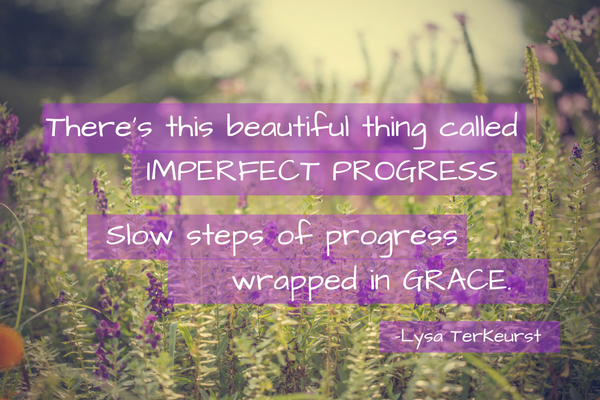
This phrase “imperfect progress” is taken from best-selling author Lysa TerKeurst’s book, Unglued. This brilliant phrase captures how we can continue to move forward while recognizing that we may stumble or even fall on occasion.
No one’s perfect! Friends, it’s time that we stop using perfection as the standard for our dietary or weight loss lives. I’ll never eat perfectly. I’ll never workout perfectly. Neither will you.
But, we CAN make imperfect progress. We can hold yourself accountable to the goals that we set. We can follow the conviction that God has given us about our health and lifestyle. That doesn’t mean that we’ll be perfect, but it does mean that we’ll be committed to “imperfect progress” and always moving forward.
TELL US ABOUT YOUR EXPERIENCE: Do you struggle with holiday eating? Which one of these five tips encourages you the most today?
by Barb Roose | Oct 28, 2016 | Christian Living/Discipleship, Women's Topics
I don’t know about you, but sometimes it can be tough for me to distinguish between my need for food and my desire to eat.

Without being critical of my body size, I’m fairly certain that quite a bit of what I consume isn’t related to my biological need for food.
A couple of years ago, my friend Jera made a pecan pie for me. I love pecan pie! I took that pie into my house and set it on the counter. While I wasn’t physically hungry, that pie started to look really good to me. In fact, I could hear that pie talking to me. Seriously, it was! It said, “Barb I’m over here. It’s so lonely over here. I think I’d like to be in your tummy more than I’d like to be sitting on this counter.”
Have you ever had food speak to you like that?
I tried not to listen to that pie, but it kept talking! The only way for me to quiet the pie was for me to eat it.
So I did.
I ate the ENTIRE pie in one afternoon.
Are you horrified? Trust me, I was – especially since I wasn’t event hungry. So what happened? My appetite, that’s what happened!
God created our bodies to need food. However, God gave us appetites as well. In addition to an appetite for food, we are born with an appetite for love, acceptance, satisfaction, achievement, and connection. Think about those things you long for every day, such as someone to love, acceptance by others, or a deep sense of connection. Each of those things represents a craving or an appetite.
Here’s the most important part: How you manage your desire for love, acceptance, security or connection determines whether you are controlling your appetite or your appetite is controlling you.
As women, this concept is critical because we always have unfulfilled appetites; and when our craving for love, acceptance or connection goes unfulfilled, we often turn to food in order to temporarily satisfy that unmet need. Does the term, “comfort food,” sound familiar?
How often do we toss into that void a half dozen cookies or a carton of ice cream? One of my favorite quotes is from character Lavon Hayes from the tv show, Hart of Dixie. After his girlfriend breaks up with him, Lavon shows up on his friend’s doorstep with a big of donuts and says, “Help me eat my feelings.”
In the Old Testament, Esau was a man with the ability to hunt his own food, but he struggled with an unidentified hunger. Maybe he wanted approval from his father or he was jealous of his brother – we don’t know. Something deep inside of him was hollow and empty enough to feel like hunger. Esau’s sneaky twin, Jacob took advantage his hunger and Esau ended up trading away his future.
How often do you eat when you feel lonely, angry, tired or sad? What are the foods that you pick up and have difficulty putting down when you are hurting?
If you get the chance, check out Matthew 4:1-11. It’s the story of Jesus’ temptation in the dessert, I mean desert. Why did God lead Jesus into the desert to be tempted by the devil anyways? It was because God wanted us to see how the power of God living within can overcome our human desires that can get out of control.
How do we deal with our hunger for love, acceptance, security, satisfaction or connection? In my Beautiful Already Bible Study, we talk about the tools that we can use to surrender our hunger to Christ and allow Him to fill us. Why? Because only Jesus satisfies!
If you struggle with emotional eating and want God to work in this area of your life, I’ve developed a HALT Food Diary. HALT stands for hungry, angry, lonely, tired. These are often to triggers for binge eating. Click here to access a copy. Print it and tuck it into your purse. Keep track of what you eat for the next few days and make circle the emotions that you were feeling while eating. Once a day, talk with God about your eating habits and your unmet deep needs.
Give your unmet desires to God instead of giving in out of frustration to food. Let God fill you up!
SHARE A COMMENT WITH US: What’s your go-to comfort food? Are you more likely to eat it when you are hungry, angry, lonely, tired or all of the above?
by Barb Roose | Oct 3, 2016 | Women's Topics

Sometimes, it good to have a little good old fashion fun! Here’s a quick one-question quiz to find out if your coffee style matches your fashion style. Leave a comment to let us know if your quiz results were as a right as a pumpkin spice latte on a cold day or if your results fell flatter whip cream after two minutes in your cinnamon dolce latte.
[qzzr quiz=”274225″ width=”100%” height=”auto” redirect=”true” offset=”0″]