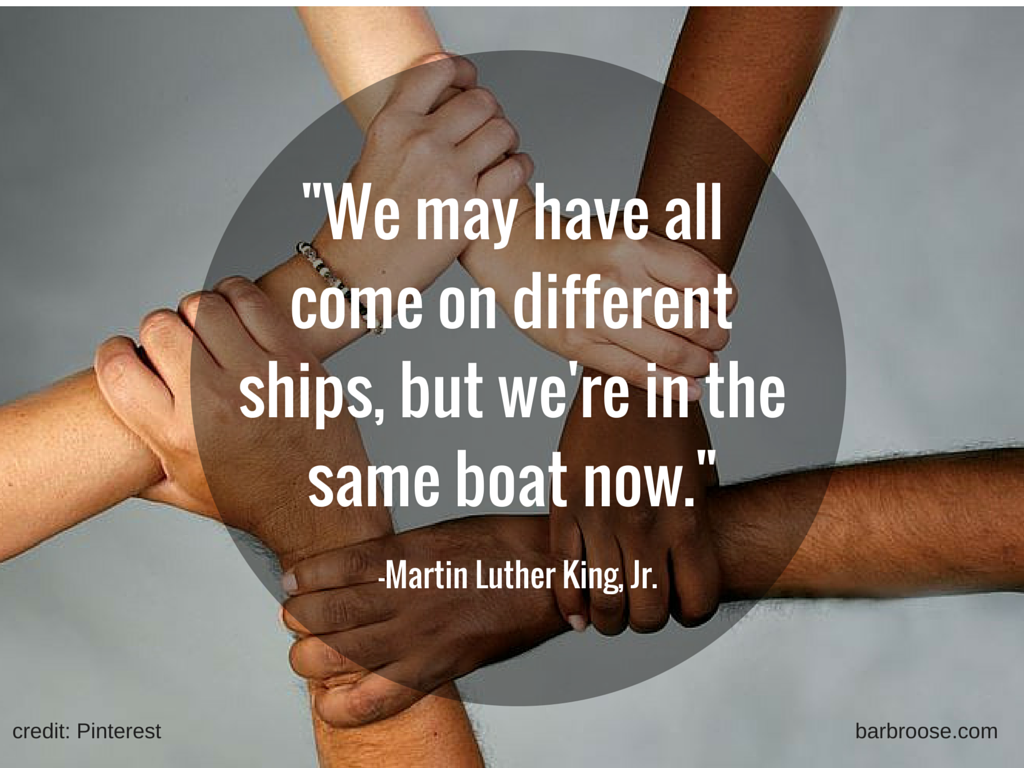
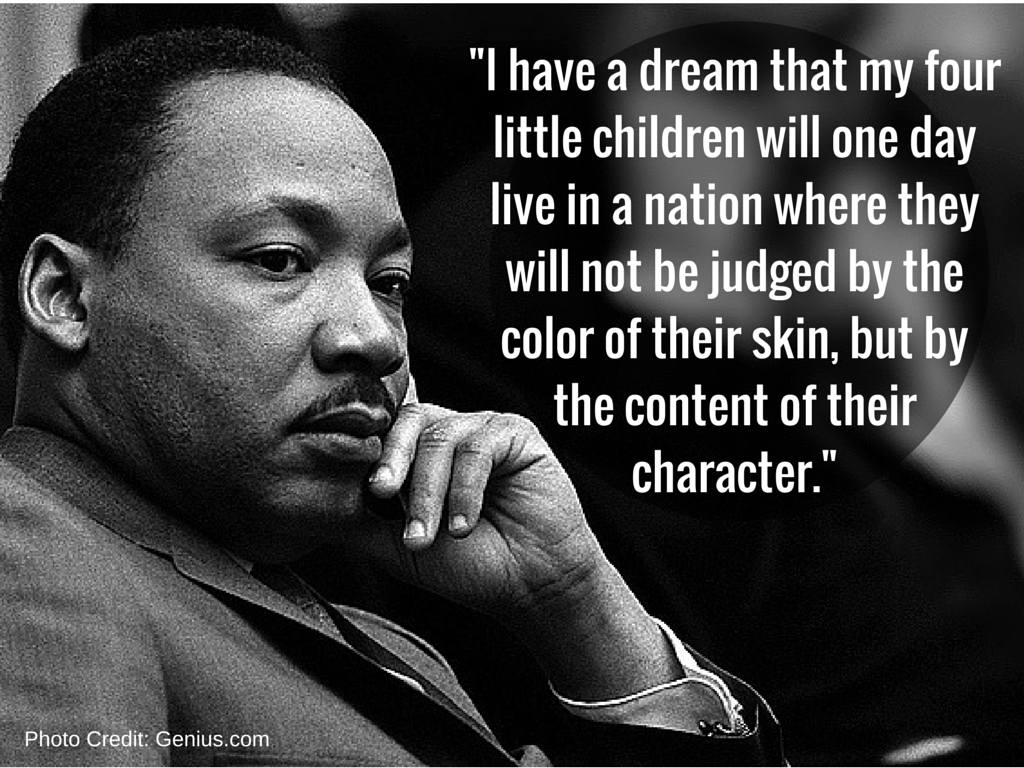
On this Martin Luther King Day, I’m reflecting today on these four quotes from Dr. King. His words still challenge me today and in our world where hate feels like it is winning over love, Dr. King reminds us to never lose hope.
Here’s Dr. King’s most well-known quote. The power imagery of his vision creates a thirst deep in my soul. The following words have become MORE, not less powerful over the years:
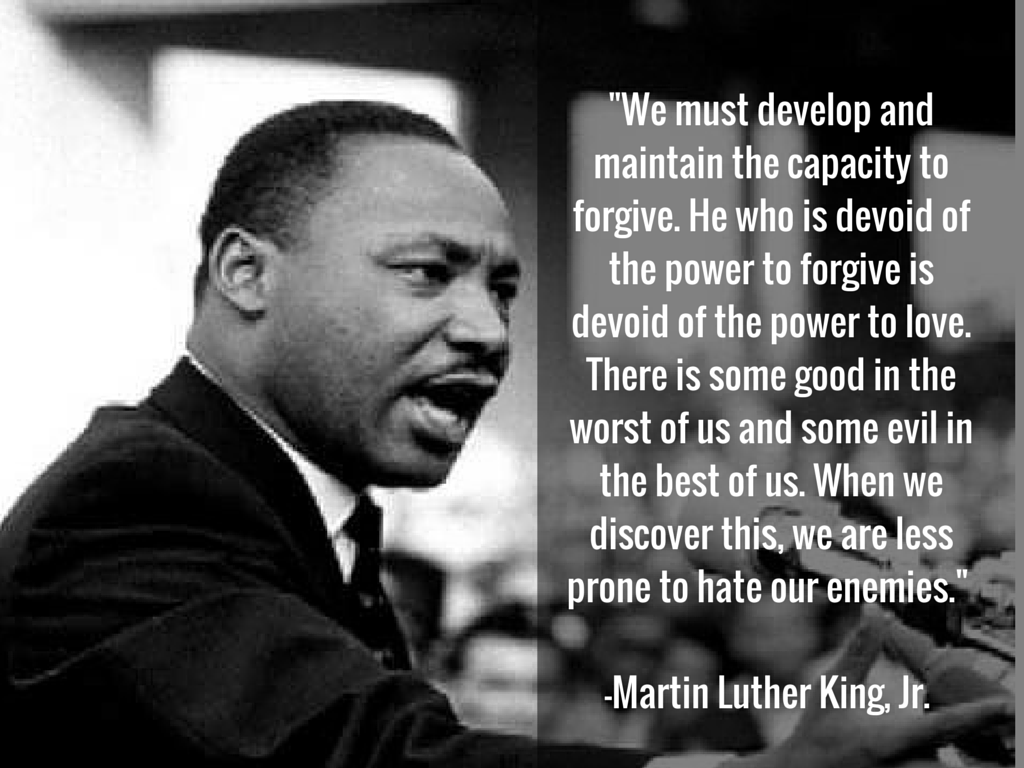
Here’s another quote from Dr. King. Inspired by his strong faith, Dr. King’s following quote wasn’t an aspirational pursuit. As a man mistreated, judged and jailed, these words represent his conviction. In fact, these words show us the secret source of replenishing power that Dr. King tapped into in order for his message to catch fire in individual hearts:
I remember watching the news when nine African-American people were killed in a church in Charleston. I watched a news reporter get choked up as he watched the community publicly express their forgiveness and sing songs of hope. He was stunned. It breaks my heart that people are shocked and amazed that Christians, who should be known for extending forgiveness, would actually forgive – and really mean it.
Is the shock because normal, rationale folk couldn’t see themselves offering such grace? Or, is it because we feel the prick of conviction? If the families of the shooting victims could forgive the murder of their loved ones, then do we have the right to hold onto our anger or our grudges?
When I was in junior high, my father won an award through his bowling league. But, he was denied entry into the building where the award ceremony was being held. He was denied entry because of his skin color. In the days that followed, I remember our phone ringing off the hook. Local authorities, news media and a few phone calls from higher-ups in the government. I don’t remember how the situation resolved, I just remember that my father made the life-giving decision to forgive and move on. While the incident left a mark, he refused to let it take over his life. That moment had a huge impression on my life. I remember my father’s example when I experience racism and prejudice.
Forgiveness allows me to move on and fight forward rather than getting stuck with my fists pounding the same ground.
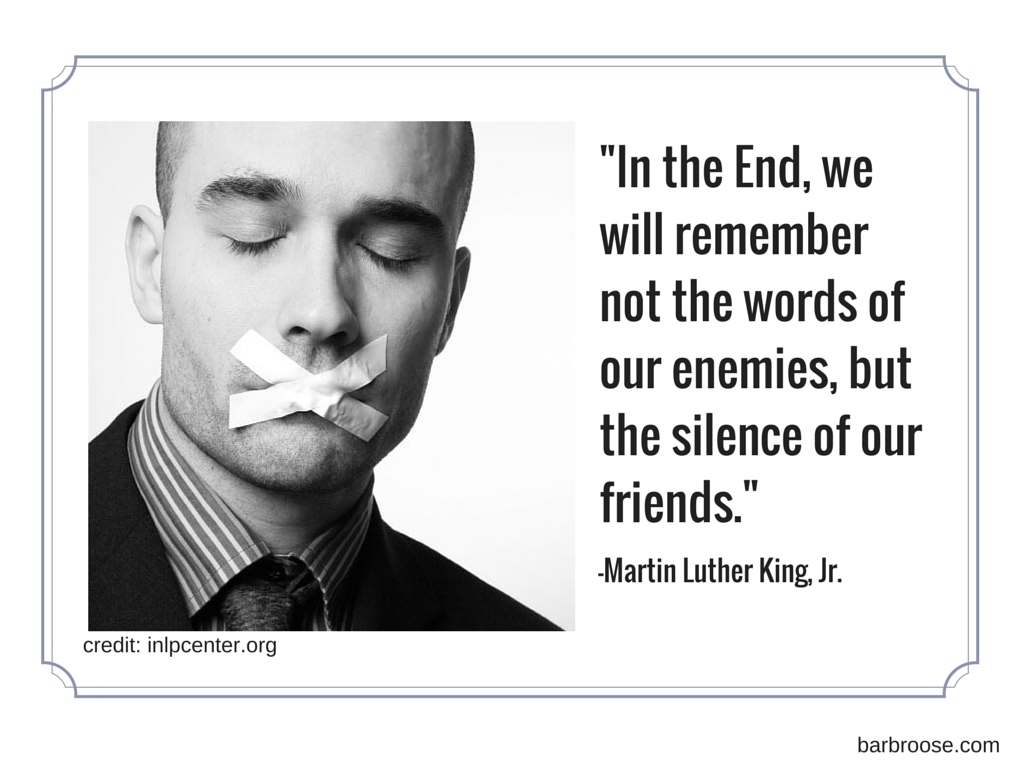
When do you speak up?
Dr. King didn’t speak up just because he wanted to be heard. He spoke up so that people could live. There was no hatred in his speech. And for those who may want to highlight his human failings, go right ahead. We can speak up without being perfect. You don’t have to be perfect to stand up for what is right.
What is the cost of your silence? What is the cost of being polite and letting your friends continue to say ignorant, prejudicial or racists things? No one ever makes a difference in this world by keeping silent. A.M. Rosenthal says this: “When something important is going on, silence is a lie.”
When we hate another, we diminish ourselves.
When we judge another, we condemn ourselves.
When we love another, we sustain ourselves.
We’re all in this together. As long as we stand under the banner of the US flag, we share this homeland together. We’re going to rise and fall together.
LEAVE A COMMENT BELOW: Which Dr. King quote inspires you the most?
NEXT STEP: If you’d like to honor Dr. King’s work in our world by learning more about race, grace and the gospel, you can check out my (G)race Project. This is a specially curated page of content that I’ve written about race and the gospel. Click here to check it out.
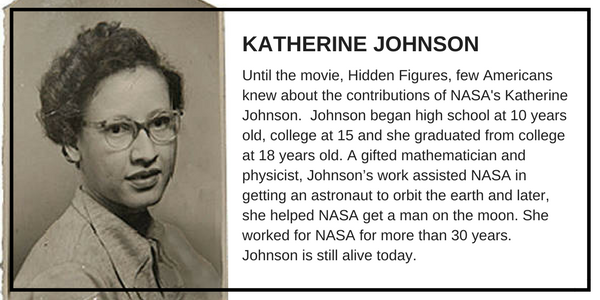
Have you seen the movie, Hidden Figures? I’ve talked about it so much that someone should cut me in on the profits for my publicity work – ha!
Not only did the movie capture my heart, the movie also reminded me that there are hundreds of not thousands of hidden figures in the black community. This matters to me because those stories don’t surface that often. I am grateful for the achievements of modern day African-Americans, which we hear about all of the time. Yet, I need to know about the contributions of those who helped build our country and those who elevated my way of life.
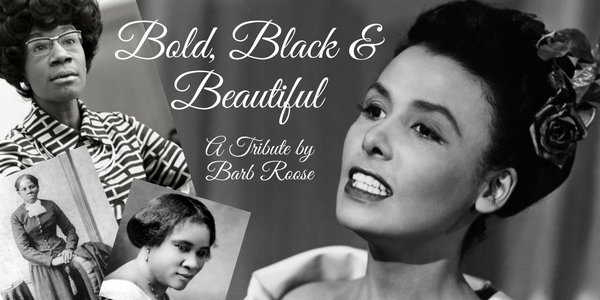
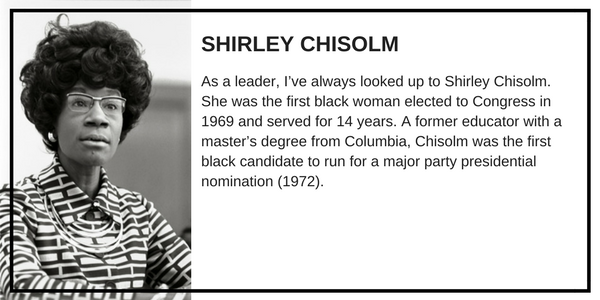
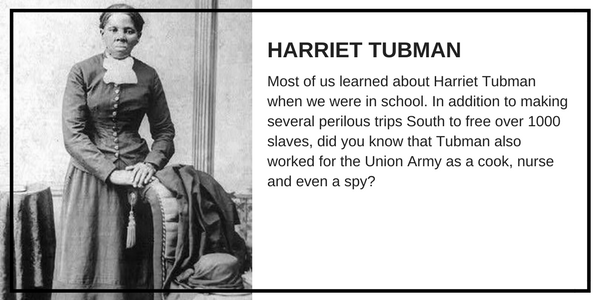
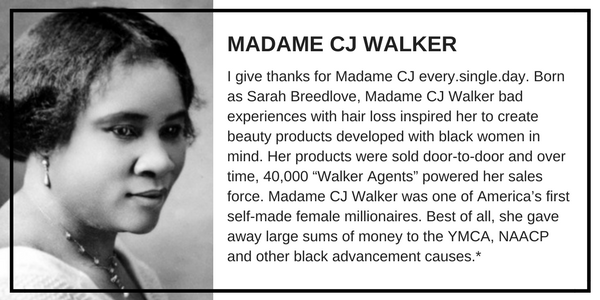
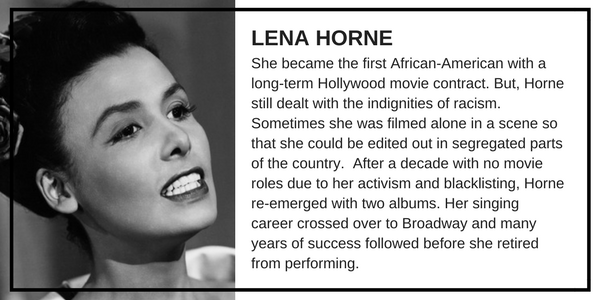
So, here’s my list of seven bold, black & beautiful African American women who’ve inspired my life. This isn’t my entire list, but I hope that these women inspire you, too. I’d love for you to tell me your list of bold, black & beautiful women. Let your list in the comments below. I’d love to hear from you!
LOOKING FORMORE BLACK HISTORY MONTH EXPERIENCES? Check out my most recent Better Together podcast featuring Cara Meredith, daughter-in-law of civil rights icon, James Howard Meredith. We’re talking about racial justice and being mamas of bi-racial children in or racially-divided country. Listen to my interview below:
Are you tired of the negativity that you’re seeing online?
If you are interested in learning to love and value people for who they are, no matter their skin color, then you may be interested in what I’ve got to say in this video.
Whenever I’m stuck with a complex problem that I can’t solve, the most helpful thing that I can do is break the problem down until I discover the foundation. When I find my foundation, I can examine it, repair it, re-enforce it and then re-build. When it comes to racism, I’m inviting you to join me in evaluating about the foundation for how we think about race and prejudice.
You’re welcome and encouraged to leave comments after watching the video. We don’t have to agree, but there will be no hatred allowed. If someone posts something that causes you to lose your peace, then that’s your cue to leave this blog and do something different. As a wise woman once said, “You don’t have to give your words to people who don’t deserve them. Keep your peace and give them your prayers.”
This year’s summer Olympics has been a breath of fresh air!
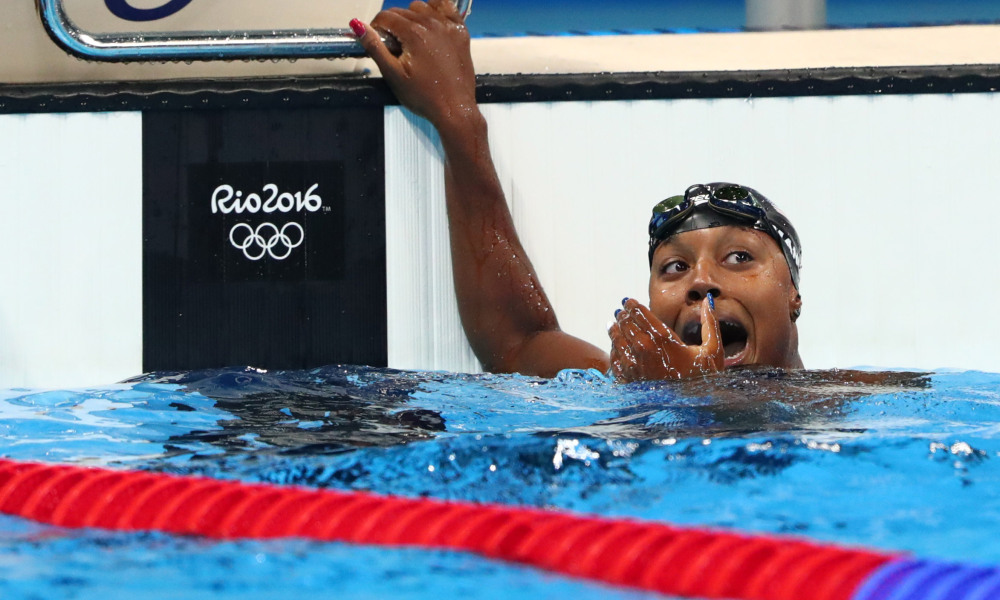
Have you had a chance to see team USA in action? For the past week, United States athletes like Michael Phelps, Kate Ledecky, Simone Biles, Simone Manuel and so many others have given us so much to cheer about!
For me, when I see are Olympic athletes take the world stage, I am filled with such a deep sense of pride. I feel like those athletes are my people!
photo credit below
Now, I’ve never met any of our Olympic athletes. I don’t know where they are from and I know very little about their lives. Yet, when they compete I cheer like crazy for them because they are wearing red, white and blue.
In fact, I believe that the Summer Olympics has divine timing…
Over the past three months, America has been more divided than it any other time in recent memory. And we are divided over so many things from the hate-filled election season, split opinions over social issues and an escalation in our centuries-old struggle with racism that’s tearing our country in half.
Yet, even as the United States is more divided than ever, this year’s Olympics reminds of how good unity can feel. We’re reminded that we could cheer for people that we don’t know and consider them “our people.” We’re reminded that we can celebrate athletes who don’t look anything like us and yet, feel like we’re winning right along with them.
Other than the Olympics, when’s the last time that you’ve seen that happen in the United States?
I’ve struggled for the past two months because there are no easy answers to the problems that divide us. I’ve been asking, “God, what do you want me to do?” My greatest fear was that I couldn’t make a difference.
After the first police shooting, I shared a story about my experience with race in America. To my surprise, hundreds and hundreds of people responded. A week later I wrote another story about my fears while raising bi-racial children and again, people responded.
Social media has proven over and over again that when our lips or fingers are typing, people are not listening. Our opinions often create more opposition.
But, as I prayed, God seemed to impress upon my heart the power of a story. I shared my story and people listened – and they responded. I began to wonder if God wanted me to create space for people to share where they come from and what they’ve been through.
Friends, let’s be honest: We don’t know how to talk to each other about race. BUT, we do know how to do a share our story.
Recently, I was reminded of the power of our stories.
Two weeks ago, I was in Roatan, Honduras. It’s a beautiful tropical island off the coast of La Ceiba, Honduras. I’ve traveled to La Ceiba many times on missions work. This time, I flew over La Ceiba and landed in Roatan to speak at a women’s conference on that beautiful tropical island.
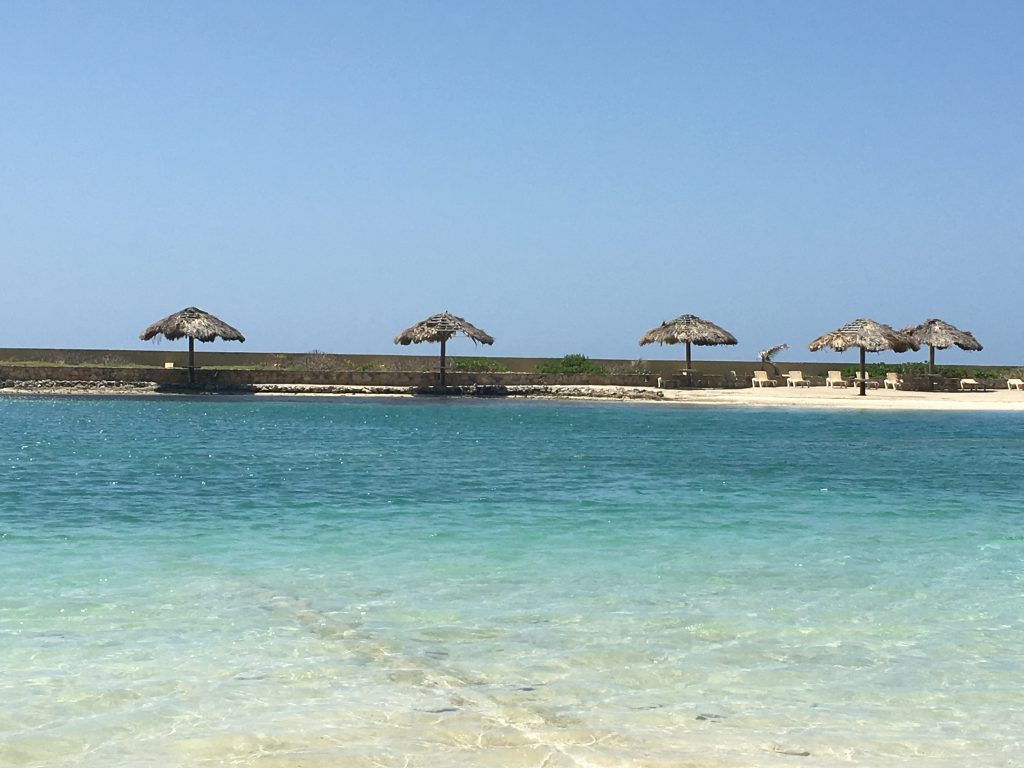
Beautiful Roatan, Honduras
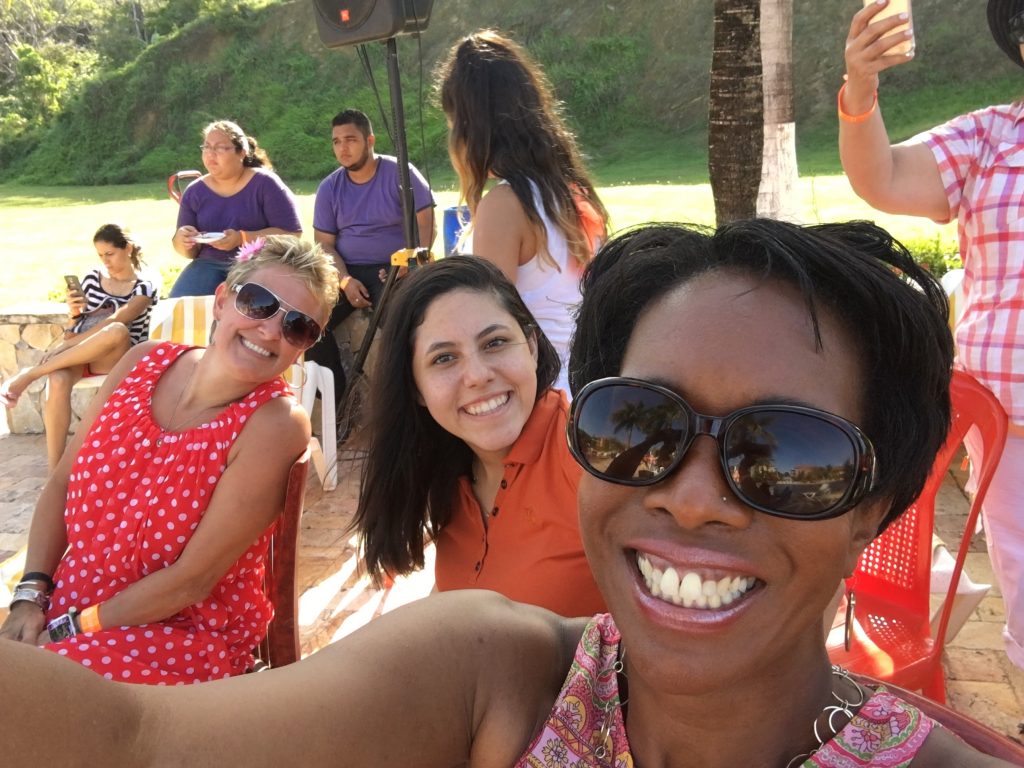
I’m hanging out with my friend and International Missions coordinator, Karen and my lovely translator, Sofia.
A gorgeous view of our final evening at the conference right on the edge of the Caribbean.
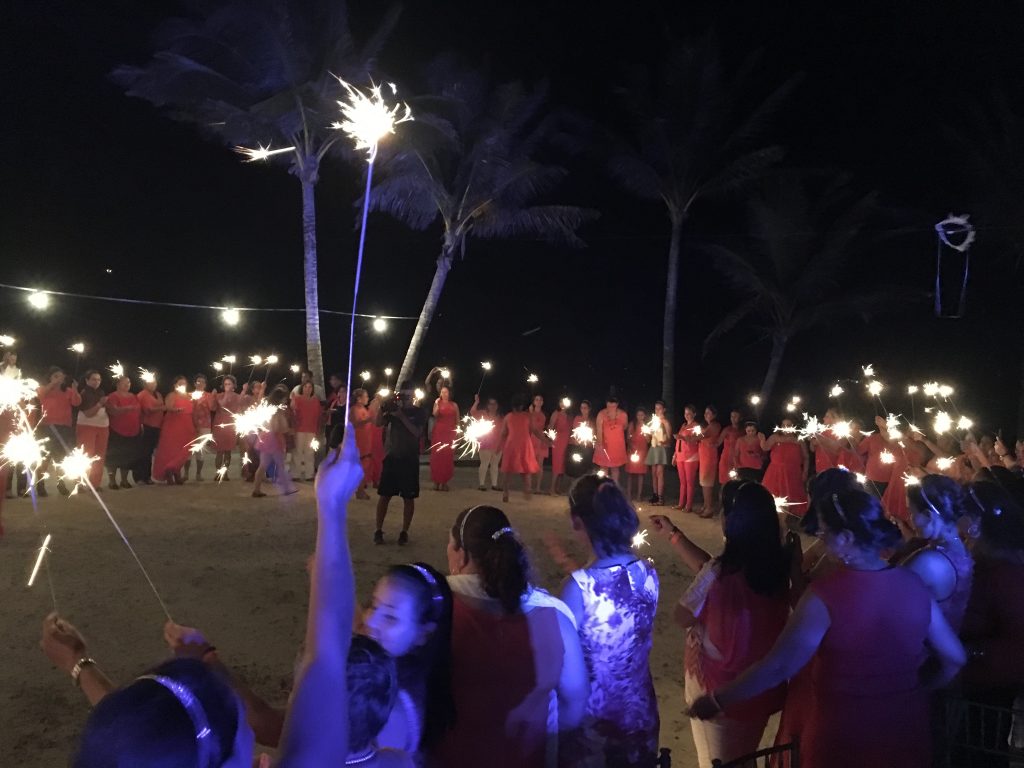
Celebrating the final night of the conference with sparklers and fireworks.
Before I spoke during the morning session, I was sitting at breakfast with my traveling companion, Karen. We joined six other Honduran women already sitting at the table. We were from different countries and spoke different languages. We had different socioeconomic and educational experiences. Yet, we were all sitting around the same table eating the same breakfast. Since my Spanish is muy mal, I asked our translator to offer a question to the women in order to break the silence. I didn’t even know what to ask. But, in that moment, God impressed upon my heart a simple list question: “Would you tell me about your families?”
For the next hour, those women spoke through our translator. They shared eloquently about their heartache, hardships as well as the trials and triumphs in their lives. Each one of the women had been through incredible hardship, yet their eyes lit up as they spoke of God’s faithfulness and how they overcame fear.
One woman told the story of a son who had been imprisoned in another country and she had not seen him in two years. However, the day before she left for the conference, he was miraculously released two years early and on his way home. Another woman shared of the death of her 13-year-old son from hydrocephaly and then a number of years later, she lost a young daughter to Down syndrome. Our translator shared of how her husband lost the use of his legs after suffering nerve damage during surgery. She shared how strong they’ve become in their faith as a result of this situation and she smiles and gives thanks to God anyways.
What a precious experience, friends! I gained a greater perspective on my life because of what those women went through. Spiritually speaking, God became even bigger to me because I had a chance to hear how He worked in their lives and in their circumstance. I was so blessed!
On that morning, I was reminded of how small our lives and faith remains when we only know our own story.
What if the first step was your decision to understand more about race was asking a question to discover more about where people have come from and what they’ve gone through?
Perhaps, you’ll consider asking someone who looks different than you out to coffee or inviting their family over to your home for dinner. Instead of worrying about what to say or obsessing about saying the wrong thing, consider beginning with the question: “Would you tell me about your family?”
Friends, I know that a single question isn’t going to be the magic fix that we need to heal of the miles-wide racial divide in America. BUT, we could reconcile the divide as we learn our stories one at a time?
I’m not sure what the answer to that question is, but what I do believe that it’s a positive step in the right direction.
SHARE YOUR STORIES WITH US!
I’ve launched a 30-day experiment called the “(g)race project.” Over the next 30 days, I’m asking 30 questions about race, grace and faith on this Facebook page. Just click here to join. You are invited to share your stories with us. My prayer is that over the next 30 days, we can begin to reconcile our country’s racial divide, one story at a time.
Photo credit: Aug 11, 2016; Rio de Janeiro, Brazil; Simone Manuel (USA) celebrates after the women's 100m freestyle final in the Rio 2016 Summer Olympic Games at Olympic Aquatics Stadium. Mandatory Credit: Erich Schlegel-USA TODAY Sports ORG XMIT: USATSI-GRP-746 ORIG FILE ID: 20160811_jel_usa_488.jpg
My husband and I were talking about the events of the past few weeks. We've spent a lot of time parsing through the different shootings and political or media angles that Americans are struggling to understand.
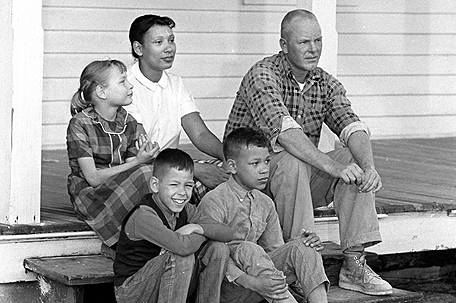
During our conversation, it struck me that it takes A LOT for people of different races to actually be able to talk about race without getting angry or defensive. It is truly a hard thing to do. In our home, talking about race is complex. My husband is Caucasian and I’m African-American. We married only 25 years after Loving vs. Virginia (1967) legalized interracial marriage in all 50 states.
Richard and Mildred Loving and their children. A movie about their court case will release in Fall 2016.
My husband and I come from different backgrounds, experiences, and perspectives. He grew up in a small, rural community and I was raised in a small town. Yet, we have to talk about race because it impacts our lives often. And not all of those conversations are easy. Some have been excruciatingly difficult.
I never set out to marry someone from a different race. I don’t think that my husband did either. Love happens, y’all. When we married, both sides of our families struggled with our union. And not just because of race. Also, because back then we were young, broke and expecting a child.
And one question persisted: “But what about your children?”
When I was in labor with my oldest child in 1992, our family held its collective breath. Not me. I needed to push a kid out. As I pushed, I also wondered whether we were having a boy or a girl. I also wondered if our baby would be light or dark. Which side of the melatonin gene pool would win?
When our child was born, skin-color took a backseat to love. For a short period of time. Our oldest daughter was the first grandchild on one side of the family and the first granddaughter on the other. Everyone fell in love at first sight.
We hoped that love would win out for good. It did for us. But not for everyone.
Raising our oldest opened our eyes to an entirely new experience with race. We still laugh about the time when my husband was out at the library with our oldest daughter. Someone asked him: “So, when did you get her?” It took my husband a few moments to realize that the person assumed that our daughter was adopted because of her latte-colored skin. My husband replied: "From the hospital."
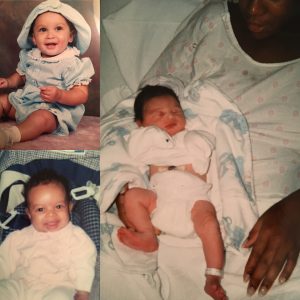
When our middle daughter was born in 1995, her skin color was lighter than my very fair husband’s skin. It freaked me out. When I placed my hand next to hers, the stark contrast overwhelmed me. A fear settled into my heart: What if no one believes that she’s mine? What if someone tries to take her from me?
Top left: Our oldest daughter; bottom left: our youngest daughter and our middle daughter is on the right.
If she was lost in a store or sick, I worried that someone in authority would question whether or not I was her mother.
Embedded within that worry was the fear that someone would look at my child’s light skin and decide that based on my skin color that some other mother - a Caucasian mother - was better for my daughter.
Was my fear irrational or not? Well, if I had a dollar for all of the times that I was asked if she was my daughter, I’d own a lot more shoes! In fact, I actually carried a family photo in my wallet until my middle daughter started calling me, “Mommy.”
Our youngest daughter arrived in August 2000 after a difficult pregnancy. She was our miracle baby. We gave thanks that she came out healthy. I also gave thanks because she came out mocha like than me, albeit a shade lighter. I was surprised and relieved. Also, selfish. Finally, I birthed a kid that I didn’t have to worry that someone would question whether I was her mother.
My kids' skin and hair color created an unwelcomed spectacle. When they were toddlers, I didn't put them on display, but people felt comfortable making all kinds of comments.
Over the years, I heard all of the comments, "Oh, bi-racial children are just the cutest." I'd smile and thank them - then move it along before my kids became a sideshow attraction.
At other times I would be asked, "Wow, are all of these yours?" I'm not sure if you've ever been questioned about whether or not your child was yours, but it's an experience that you'll want to skip. Quick tip: If you aren't sure about whether or not someone's child is theirs or not, don't ask. Unless you see that kid on a "Missing Child" poster, it's actually none of your business. If curiosity is killing you, try offering, "Tell me about your family."
Being the mama of three bi-racial girls with three different types of hair textures was a challenge. We owned A LOT of hair product. And none of their hair was exactly like mine. Their dad's genes showed up and scared me. Talk about a learning curve! I did not realize that Caucasian hair tangled so easily. Those tangles were no joke! I spent too much of my life combing out tangles. I spent my childhood in braids and mom only had to wash my hair a few times a month. With three bi-racial kids and daily hairwashing, there was a lot of crying in my house. Mostly by me. One of my daughters was just a few seconds from getting her hair completely buzzed....
One of the toughest race-related conversations my husband and I had was over what race circle our kids would fill-in on standardized testing. Talk about lots of long conversations! When my oldest daughter began school, kids still had to choose one racial demographic. That was stressful! We didn’t want our girls to deny any part of who they were for any reason.
We considered our nation’s history with race and decided at that time that we never wanted our kids to deny the African-American part of them. So, we made the decision for her to fill-in the African-American circle.Thankfully, a few short years later testing demographics expanded and all three girls could fill-in “bi-racial.” Now that my kids are older, I navigate the positives and consequences of the decisions that we made for them long-ago.
Fast-forward a lifetime. Our oldest two daughters are adults and one is in high school. We've navigated all types of experiences in life. Some good. Some bad. Some heartbreaking. Some experiences are still filtering through...
My girls are walking their own journey with race. I’m sure that there are a few stories that they’ll tell us in the years to come. I ask myself: Did we talk about race enough?
I hope so. Probably not. Maybe...
But, I hope that we raised them to feel connected to both sides of their heritage. Did we? I think, but I also wonder if it was enough. As their parents, we did our best to put them in environments where they could make friends of all races. We live in an urban neighborhood and our kids’ private Christian school grew in diversity over the years. In fact, one of our girls had three besties in high school. This group of brilliant young women were called “The United Nations” because of their diversity – and one of the girls actually landed a scholarship because of her friendships with the other girls. I love that story!
It's the kind of story that gives me hope.
I’m praying that if we can’t figure out how to get ourselves out of this mess, maybe our children will see our mistakes and steer a path far away from our prejudice and racism.
Thanks for stopping by! Join the conversation in the comments. What suprised you about my story? What is your experience? Let's listen and respect each other in the comments.
Barb Roose is a speaker and author who is passionate about teaching women to live beautifully strong and courageous so that they experience God’s great adventure of faith and purpose for their lives.
Check out Barb’s new releases, Stronger Than Stress: 10 Spiritual Practices to Win the Battle of Overwhelm book and Stronger Than Stress: 10 Spiritual Practices to Win the Battle of Overwhelms Bible study.
Barb lives in NW Ohio and is proud mother of three adult kids. Whenever possible, Barb prefers to eat dessert first. Visit Barb’s online home at barbroose.com.

 When do you speak up?