by Barb Roose | Jun 26, 2017 | Women's Topics
by Barb Roose
Fifteen years ago, I lived on empty. Stressful job. Small kids. My issues. Marriage.
If I was a car, my gas gauge warning light was ALWAYS on.
Don’t you hate it when that warning light is on? My gas gauge warning light always comes on when I’m in the middle of doing other things – buy groceries, running errands, picking up kids. That warning light pressures me because fuel is important, but so is everything else in our lives.
How often did I keep around pushing the limits of a near-empty gas tank in order to keep continue trying to accomplish other things?
I used to live the same way.

My “warning-light-life” (say that three times fast) had become a painful and pitiful way of life.
When I ran out of energy at the end of each day, everyone in my household knew about it. Short temper. Snippy Words. Poor listening. Fitful sleep filled with nightmares about unfinished to-do lists and often dreams of running away from it all.
Yes, I was a Christian and I loved my family. I knew that I was blessed. But I for a long time, I was an-empty Christian. Instead of being filled with the Fruit of the Spirit, the only thing that I was full of was exhaustion.
I’m pretty sure that someone out there can relate to what I’m saying…
If your well-being or energy could be measured like a gas gauge, how much gas do you have today?

If you’ve got a full tank, you’re giving thanks right now. You know that it’s not easy keeping a full tank, but bless you to being out there as a beacon of hope that other women can see.
But, if you’re riding your warning light or if you’re out of gas, you may feel a combination of guilt and desperation right now. You feel guilty because you don’t have any more to give, but everyone seems to need you. You feel desperate because you don’t want to live this way anymore BUT you also aren’t sure if you can change (and you aren’t even sure what change is.)
Sweet sister, I know your kind of tired. I know your tears.
I may not know your circumstances, but I know that you don’t want to let the people down in your life. I know that you believe that if you fill in all of the gaps, then that’s how you show you love them.
I know.
I thought that I was supposed to be the gap-filler, too. If there was a gap between someone’s need and their ability, I thought that loving them meant that I should fill in that gap with my energy, my money or time. After all, if I loved them, then I should be there for them no matter when they called or no matter what I was doing, right?
Here’s something that I want to share with you, but not all of you will agree with me. But, keep reading anyways:
Love may mean sacrifice, but love isn’t suicidal.
Love IS sacrificial.
But we’ve got to know the difference between loving sacrifice and killing ourselves when caring for people.
Jesus didn’t run after people wearing himself out trying to fix their problems. We never read about the Savior of the world worn out after serving people. Jesus let people be responsible for themselves. When we show love through sacrifice, our effort is to bring hope to others, but it also should bless us, too. Our sacrifice should satisfy us, not suck us dry.
What do I mean when I say that love is suicidal? Talking about suicide is a tender conversation. If you’ve lost someone to suicide, my heart breaks for you. It’s devastating when a loved one reaches a place where he or she comes to believe that there was no hope left.
Have you worn out, ruined or even killed your health, career, emotional well-being or financial security to try to rescue someone who refuses to be responsible for themselves?
You’re trying to help people, but is it wise to ruin your health, finances or well-being to try to save someone else’s? Only Jesus saves. We can’t. But, without meaning to, you may be sending the message that if you don’t step in and fix their lives, then they have no hope.
When there are gaps in someone’s lives, those are the spaces for God to fill in, not you.
If we’re always filling the spaces for people when they have a track record of not paying their bills, can’t maintain a job, often need bail money or always running short on the rent, then we’re filling the space that just might be keeping them from seeking God. Stop filling the potholes dug up by the irresponsible decisions of others. Don’t kill yourself trying to save someone from their bad choices and decisions. Only Jesus can save them.
Here’s the spiritual implication of it all: Are you praying that someone will come to know Jesus? Keep praying, but make sure that you aren’t filling the spaces in your life that keep them from running into Jesus open arms.
Best advice that I ever received from a friend and therapist, Tim Butler: “We have to let people discover their need for God.”
Most of us came to Jesus because we didn’t have anything left in the tank. That’s why we ran to Jesus. Let’s give our adult children, wayward siblings and parents or friends – give them ALL a chance to run to Jesus, too.
Now some of you are wondering if you stop fixing someone else’s life, then what do you do with yourself? How do you fill your tank back up again? Here are some questions that you need to answer for yourself:
What do you need to thrive spiritually?
What do you need to thrive financially?
What do you need to thrive socially?
What do you need to thrive emotionally?
What do you need to thrive in your relationships?
Thriving means that you are maturing and growing. It’s knowing how to fill your tank and live without draining your tank.
Just because you are thriving doesn’t mean that you don’t love the other people in your life. In fact, when you take care of yourself, you model the right kind of behavior you want for them one day.
Here are three ways that you can begin to focus on how to stop filling the gaps for others and begin filling your tank instead:
- Memorize 1 Peter 5:7: “Give all of your worries and cares to God for He cares about you.” Make sure the first thing you do each day is tell God about all of the situations in your life. Stop carrying those burdens around. When people try to give you their burdens, look them in the eyes and say, “Hang in there! The answers will come. I will pray for you.” Then pray for them, but clamp your mouth shut before you say the phrases, “I can…” or “Would you like me…” or “Let me…”
- Say this: “No is not a bad word.” If you struggle with saying “yes” all of the time, make it a goal to say three “No’s” this week. Are there things that you know that you shouldn’t be doing to fill the gaps in someone else’s life? It’s time to let them do their own #adulting. But be kind: As they say: “Say what you mean and mean what you say, but don’t say it meanly.”
- Check out my list of 101-ways to take care of yourself. Pick one thing to do for yourself each day for the next seven days. Self-care is not selfish. CLICK HERE to access the list.
LEAVE A COMMENT! Is your tank on full, half-tank or are you running on empty? How has God spoken to you through what you’ve read today?
[fbcommentssync]
by Barb Roose | Jun 19, 2017 | Scripture Devotional, Women's Topics
It was 6:00am on Sunday morning when my cell phone rang.
I’m not usually up that early on a Sunday, but I had to get to church early that day to prepare for that morning’s activities, so I awoke thirty minutes earlier than usual. I snatched up my phone to view the caller ID. It was one of my closest girlfriends. I answered, “Hello.”
Sobs. All I could hear were soft, steady sobs.

I took a deep break and simply said, “I’m here.”
We sat in silence for several moments. As one who has sobbed on the other end, there’s nothing more soothing than knowing that the other person is willing to sit and wait, unrushed until words are ready to come.
After a few moments, she began to talk. Out pours a story of late night events that overflowed into the early morning hours – her painful recollections broke and joined my heart to hers simultaneously.
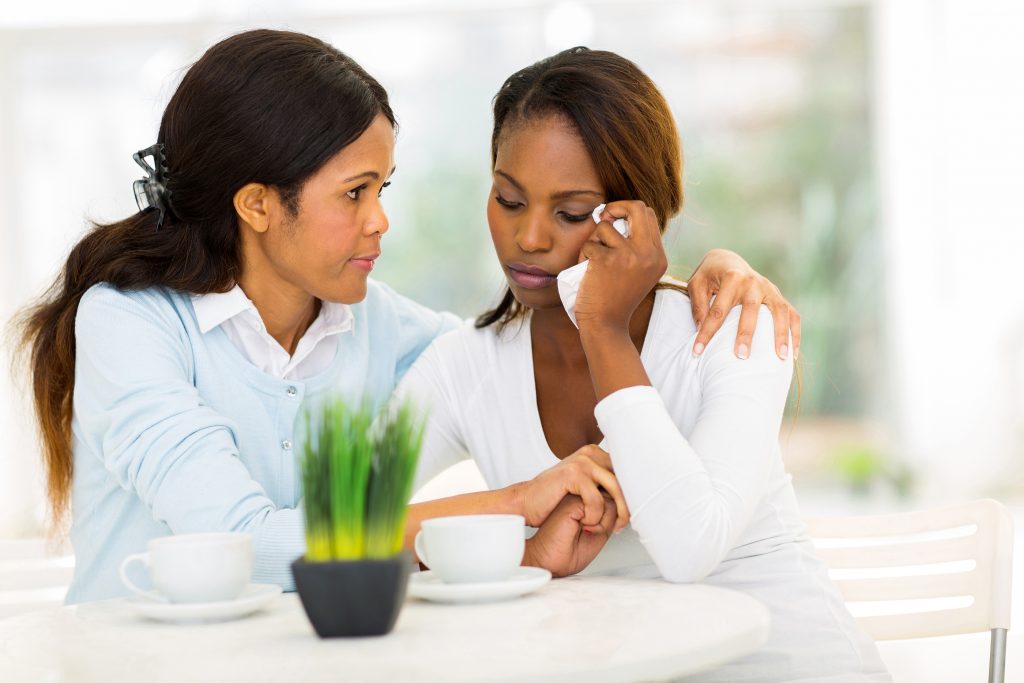
In that moment she just needed me to be her friend and present in her pain. We prayed that morning and for many days after that. As sad as that event was, I was grateful that she had invited me to share that difficult space with her life.
When life falls apart, we need a special group of friends to hold us up when our lives are falling down around us.
Do you remember the story of Moses’ arms tiring while he held them up as the Israelite army battled their enemies? As long as Moses’ arms remained in the air the Israelites had the advantage. Yet, Moses’ arms began to sag to the ground the army faltered.
Thankfully, Aaron and Hur showed up to hold up Moses’ arms and the army was victorious.
What would have happened if Moses refused Aaron and Hur’s help?
“Oh, no guys. You don’t have to help. I’ll be fine in just a minute. You guys are so busy, you don’t have to stop and help me.”
“Thank you for offering to help! But, I’m sure that there is someone out there who needs help more than me.”
Sisters, there are times when we need to put out the 911 call for help. Stop pretending that your life is fine when it’s not. Is it time to dial the digits and say, “I’m drowning here”?
I know that we all hate making that phone call. I do, too. In fact, I’ve really had to work hard to overcome my pride and fear. I hate being needy. But, I’ve learned that if I can get through tough times easier if I reach out to my special group of friends BEFORE I start to fall down.
I call this special group of friends “go-to girls,” This is a group of two to four women that you can call when your life flips upside down and burns to the ground.
My go-to girls held my hand when I went through a bout of depression many years ago. My go-to girls were there when my husband and I hit a hard wall or I’ve had crisis moments with my kids. My tears have soaked my go-to girls’ shoulders and my texts have filled their screens. I know that their lives are busy but yet they make time for me. And I thank God for them each and every day.
Do you have some go-to girls in your life? Tell us about how your friends have stood by you by leaving a comment below.
If you are struggling with finding significant friendships with other women, check out the “Just like eyebrows, two are better than one” chapter in my Enough Already book – on sale now here on my website until June 20! I’d love to sign it for you 🙂
by Barb Roose | Jun 10, 2017 | Women's Topics
by Barb Roose

Me first thing in the morning…
When I wake up in the morning, one of the first things that I do is a 101-point body inspection.
First, I survey the landscape of my face, hair, and neck to see if any new lines, spots, wrinkles or unwanted hair has appeared in places where they should not be.
Then, I turn sideways in the mirror to check whether my midsection looks thicker or thinner than the day before. I zero in on my lower stomach area because if something went wrong overnight, it’s going to appear there first. Next, I’ll swing my hips around to see if my rear end has lowered anymore since the day before. I admit that there is no objective ay to know for sure, but I check anyway.
Next, I’ll swing my hips around to see if my rear end has lowered anymore since the day before. I admit that there is no objective ay to know for sure, but I check anyway.
The final phase of the inspection is the weigh-in. Although many women avoid the scale, I invite this misery by stepping on the scale at least two or three times a week.
There are rules to the weigh-in to make sure the weight is the lowest possible. I believe that my most successful weigh-ins happen first thing in the morning after I’ve used the restroom and, most important when I am naked as a jaybird.
Even though I know how much God loves me, I’ve fought an ugly struggle with the numbers on my bathroom scale.
Why do we judge ourselves by the number on the scale? As much as we know that we shouldn’t, we do, right?
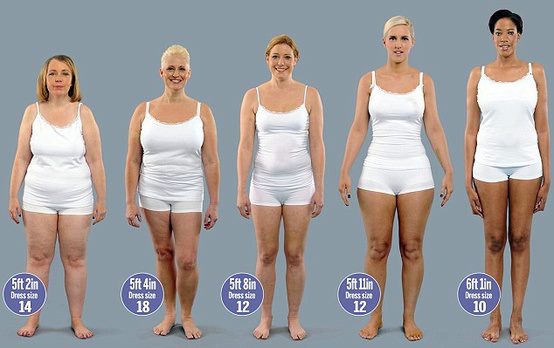
Have you seen this photo before?

photo credit: cutsandcurves.tumblr.com
Here are five women of varying body sizes and heights, but they all weight the same weight. For those who are nosy, these women weigh 159 pounds.
What’s the point of this photo?
Scales give us a report, but they don’t give us a right to beat ourselves up.
Friends, I weigh 172 pounds. But my weight doesn’t have anything to do with my gifts, talents or passion. It does impact what size clothes I wear and whether or not I can fit into a kiddie ride at the amusement part. Luckily, both of those situations can be navigated.
So, how do we keep the scale from becoming the gauge of our self-worth?
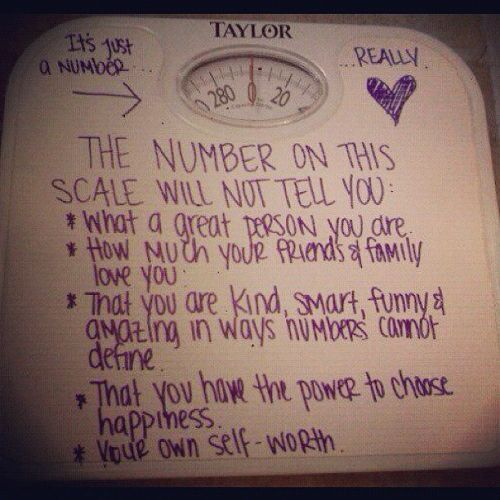
Friends, keeping track of our weight is important for a variety of physical reasons, but here’s a great tip to keep your scale from imploding your mental or emotional outlook. Did you know that you could write on your scale? I found this picture on Pinterest and you can do it, too.

My personal strategy …
I got tired of struggling with the scale, so I found a way to sever the scale from my self-esteem.
I’ve decided to tie my weight to my water consumption. I shoot for drinking about ½ of my weight in ounces each day. If the numbers on the scale increase, it’s often because I’ve been eating bad calories instead of drinking more water.
This may not make sense to you, but this shift in focus has worked for me.
Now, when I look at the scale, the number is no longer tied to my self-worth because I’ve tied it to a healthy behavior that I can control.
What do you think of my strategy? Leave a comment below.Do you have a strategy for how you keep the scale from determining your self-worth?
Do you have a strategy for how you keep the scale from determining your self-worth? Share your tips with us and let’s encourage each other!
*Excerpts taken from my Enough Already book. It’s on sale and if you order, I’d love to sign it for you. Click here to order.
by Barb Roose | Jun 4, 2017 | Women's Topics
A challenge that just might change how you feel this summer when you’re wearing a swimsuit…
by Barb Roose

A few weeks ago, I went shopping to replace my swim top. I have a great swim skirt, but I’ve had bad luck with swim tops. I scoured the rack for possible hopefuls and with trotted off the dressing room where I spent the next 15 minutes bending and twisting my body in and out of those high-Lycra tops. Getting that material to stretch around my real-woman body is no joke! No doubt the woman in the adjacent room heard my fervent prayer. “God, PLEASE let me get this top off without passing out.”
I leaned, bounced and sweat so much in that dressing room that I counted it as a workout.
Even with everything that I know about how God sees me as His beautiful daughter, swimsuits tend to test me. After a winter of camoflauge clothing, swimsuits expose not just our skin, but how we feel about the skin that we’re in.
When it comes to swimsuits or any other shopping experience, we often engage in one or both of the following:
1. We COMPARE our bodies to other women’s bodies whether our friends, social media images or magazines.
2. 2. We CRITICIZE inner selves for failing to get our act together, whether we beat ourselves up for not eating healthier, not exercising or shame-related issues from our past.
In my Enough Already book, there is a controversial chapter called “The Vagina Dialogue.” I didn’t use any vulgar language or inappropriate content, but I dared to use a word that describes a body part that to the Almighty God created in each and every woman. Vagina. Some of you are quite uncomfortable right now…
Soon after Enough Already released, a Christian woman blasted me for using the word citing that proper Christian women shouldn’t use such language. I respectfully disagree. When we’re afraid to talk about our bodies in a God-honoring way – including the private parts, we’re likely to feel ashamed of our bodies. That shame is so easy to pass down to the daughters and granddaughters in our lives.
In the “Vagina Dialogue” chapter, I reflect on how one of the scripture authors – someone inspired to write by God – described the female body:
You are beautiful, my darling,
beautiful beyond words.
Your eyes are like doves
behind your veil.
Your hair falls in waves,
like a flock of goats winding down the slopes of Gilead.
Your lips are like scarlet ribbon;
your mouth is inviting.
Your cheeks are like rosy pomegranates
behind your veil.
Your neck is as beautiful as the tower of David,
jeweled with the shields of a thousand heroes.
Your breasts are like two fawns,
twin fawns of a gazelle grazing among the lilies.
Your thighs shelter a paradise of pomegranates
with rare spices—
(Song of Solomon 4:1,3-5,13)
What you just read is actually in the Bible. Think about how that man complimented his love. He wasn’t just saying things to sweet-talk her into bed. Instead, the metaphors that he used to describe her feminine body were thoughtful descriptions of the most magnificent and treasured jewels, perfumes, and creatures on earth.
Why can’t we appreciate our bodies like that? How can we testify God’s goodness to others if we can’t proclaim God’s goodness in ourselves? Friends, women are using their bodies like weapons and whipping posts because they don’t know God’s beautiful truth. If we want to shine the light of Christ, we’ve got to make sure that light is seen in us, both inside and out!
Are you ready for a challenge?
Do you want to stop condemning your God-given body and start celebrating yourself, even in a swimsuit?
Today, I’m giving you the same challenge that I gave women in the book: Using the passage that we read as an example, create your own positive descriptive phrases to characterize the following parts of your body:
My lips are like_________________________________
My neck is ____________________________________
My breasts are like _____________________________
My thighs shelter _______________________________
At first, this exercise was really hard for me. I wasn’t used to using positive words to describe myself. Here’s what I finally came up with:
My lips are like fluffy soft pillows that beckon a dreamy night’s sleep.
My thighs are like the strong trees standing tall in my front yard.
While these descriptions might be a little silly, it’s a lot better than standing in front of the mirror crying or eating a quart of ice cream in shame. Instead of cursing our bodies, let’s celebrate them as God’s creation.
Will you please do this exercise? It’s okay if it takes a few days to complete but stick with it. Once you come up with positive descriptions for the body parts listed above, post the descriptions and read them each day for seven days. Instead of repeating the lies that our culture has told us about beauty, learn how to talk to yourself as God sees you! BONUS: Share one of your descriptions in the comments below and I’ll choose a winner on June 12 to win a copy of my Enough Already book.
My sweet friend, how you look in that swimsuit isn’t the issue. The problem is what your mind is saying to your heart about you.
You are God’s beautiful daughter, inside and out. Never tell yourself anything other than that!
P.S. On next week’s Better Together podcast, I’m interviewing my friend, Dr. Susan Pohlod about our female bodies. Sue is a long-time friend of mine and a passionate women’s health advocate. also provided the interview for “The Vagina Dialogue” chapter in my Enough Already book.
by Barb Roose | May 28, 2017 | Better Together Podcast

So, you and you friend have gotten into a fight. What now?
A few years ago, I hurt a friend. It wasn’t on purpose. There was a conflict between my friend and another person. I thought that I was being helpful – a bridge-builder per se. I stuck my nosy nose into the situation and gave my worthless two cents. The next day, my girlfriend called in tears to let me know that my well-meaning words put her in an awful position. I felt awful. I’d hurt my friend.
Have you ever been hurt by a friend? Have you ever been the one to hurt a friend’s feelings? No matter which side you find yourself on, it’s painful all the way around!
After last week’s Better Together episode with my guest, Natalie Chambers Snapp, I heard from many women who’ve dealt with friendship break-ups, heartache, betrayal and pain. It’s so hard sometimes!
I love how Natalie shared her “PEG System” to help her think through friendship conflict. Here’s an explanation and something that you can consider if you have a friendship that is broken right now:
Pray – Instead of taking our pain to friends, take your pain to God and ask for clarity on what’s going on.
Examine – Ask yourself tough questions like:
- What’s my role in this conflict?
- Can I be with my friend in the future without replaying the hurt?
- Do I need to talk to her about the problem OR is this a “me” issue that I need to work out with God?
Go Straight to that Person – Direct dialogue, but Natalie lists a few conditions in the podcast.
This podcast is jam-packed with solid Biblical insight about not only friendships, but Natalie challenges our hearts to realize where God needs to work within us.
 GIVEAWAY: I’m giving away a copy of Natalie’s NEW Becoming Heart Sisters Bible study! It’s available at Christian retailers nationwide, but you can enter to win a copy by clicking here and leaving a comment on last week’s blog page. Winner will be drawn on June 5.
LEAVE A REVIEW: Did you like this episode? I hope so! Help other women discover this podcast on iTunes. CLICK HERE to leave a review about this episode on iTunes.
About Natalie?
Author Natalie Chambers Snapp uses her own and others’ stories of successes and failures to illustrate what she has learned about girlfriend relationships. Healthy boundaries, honesty, tact, sharing, and agape love all play a part in being and maintaining a circle of close confidants. She also deals with the inevitable challenges that face many relationships including how to handle conflict; life changes like a new baby, move or divorce; and when it is right to “break-up” with your friend.








 GIVEAWAY: I’m giving away a copy of Natalie’s NEW Becoming Heart Sisters Bible study! It’s available at Christian retailers nationwide, but you can enter to win a copy by